


Across Burundi, families struggling with unemployment and poverty are increasingly falling victim to fraudulent overseas recruitment schemes, with some losing their savings, livestock and land after being promised well-paid jobs for their children abroad.
The exact number of victims remains unknown, but testimonies emerging in recent days paint a troubling picture of how far some families are willing to go in the hope of securing a better future for their children.
Some have sold their property, others have borrowed money or mortgaged their land to pay intermediaries claiming to have connections with recruitment agencies in Arab countries and elsewhere.
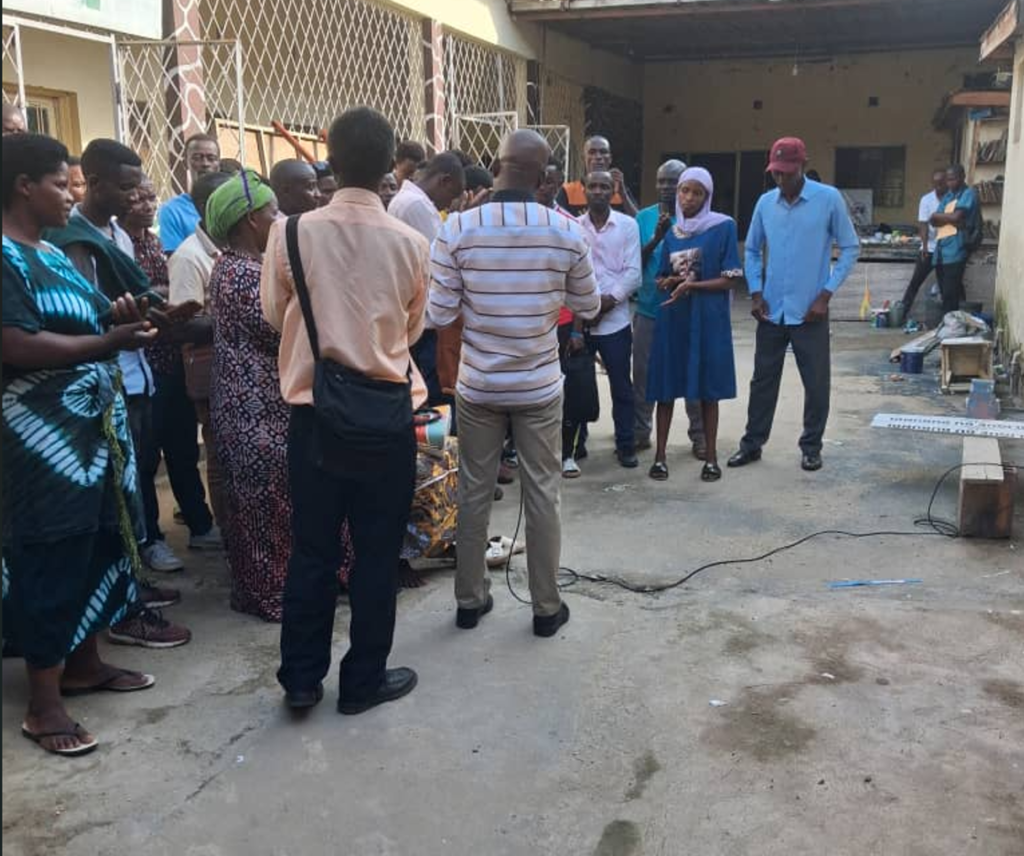
Earlier this week, dozens of families from different provinces of the country who say they were victims of the recruitment scams approached civil society organisation ALUCHOTO seeking assistance. The organisation promised to provide lawyers to represent them in court as they pursue their cases.
Their visit is among several accounts of alleged recruitment fraud emerging in Burundi, although many other victims remain reluctant to speak publicly about their experiences.
For Edyne Sibomana, a resident of Mugina commune in Bujumbura Province, what began as an opportunity to help her son find employment abroad has turned into a family crisis.
She says she was approached in June 2026 by a woman identified as Donavine, who told residents that young men and women holding passports, as well as other able-bodied people, could be recruited for jobs in an Arab country.
“Donavine came to us in June 2026 and told us that young women and men with passports, or any other able-bodied person, could be sent to an Arab country for employment,” Sibomana recalls.
According to her, the recruitment initiative was presented with such confidence that even local administrative officials signed agreements between Donavine and families willing to provide their land as collateral.
Sibomana says she paid 500,000 Burundian francs and handed over her plot of land in the hope that her son would secure employment in Jordan, where he had allegedly been promised a monthly salary of 4 million francs.
The promise was enough to convince other families in the area to part with their property and money.
But the promised departure never happened.
Sibomana says families were instructed to report to an office in Ngagara’s Zone 9, where their children were supposedly expected to begin their journey abroad.
“When the day came for our children to leave, we went to the office we had been directed to in Zone 9, Ngagara. But there was no indication that our sons and daughters were going anywhere. We had even borrowed money to buy suitcases and prepare them for the journey. That was when we realised we had been scammed,” she says.
For some victims, the financial losses have gone hand in hand with the breakdown of family relationships.
Sibomana says her marriage has been affected by the incident, with her husband blaming her for the family’s losses.
“My husband chased me away because he says he cannot accept that we sold our cow to raise the 500,000 francs we gave them, on top of the money spent buying other things,” she says.
Her experience reflects the difficult choices facing many Burundian households, where the lack of employment opportunities, particularly for young people, has made the prospect of working abroad increasingly attractive.
For parents already struggling to provide for their families, the possibility of having a child earn a regular salary overseas can appear to be a way out of poverty.
Grégoire Barakamfitiye, another resident of Mugina commune, says he also lost money after being approached by individuals claiming to represent a recruitment agency.
He says the people involved promised that his son would be sent to an Arab country for employment, although he never established the name or address of the agency they claimed to represent.
Barakamfitiye believes the country’s unemployment crisis makes families particularly vulnerable to such promises.
“As a parent, when you hear that your child could get a job, you see it as a way of easing the burden we are carrying today,” he says.
He claims the recruiters told families that paying 15 million Burundian francs would allow their children to secure employment and eventually repay the money from their salaries.
“I had already paid 2.5 million francs. They promised that once my son started working in Jordan, I would gradually recover the money,” he says.
But the promised opportunity never materialised.
Borrowing money for jobs that never materialise
The financial pressure is not limited to families in Mugina.
A. Niyokwizera, a resident of Musenyi in Mpanda commune, also says she was deceived by people promising overseas employment.
The approximately 25-year-old mother, who already held a passport, says a woman identified as Francine approached her with an offer of recruitment through a company that was supposedly preparing to send workers abroad.
According to Niyokwizera, she was told that the departure would take place the following Friday, leaving the family with only a few days to raise the required money.
“I forced my husband to take out a loan of one million francs from a savings group. On Tuesday, they came to inspect my plot of land so it could be mortgaged. I also gave them 100,000 francs, but the payment was not recorded anywhere. When Friday came, we could no longer find those people,” she says.
The experience illustrates how quickly families can become financially exposed when recruiters create a sense of urgency around supposedly limited departure dates.
Some victims say they were approached by individuals claiming to work with recruitment agencies whose names and physical addresses they could not verify.
Others have mentioned an agency known as Tunajali Company.
A 28-year-old woman, who requested anonymity, says she was recruited through the company in August 2026 and travelled to Saudi Arabia expecting to find employment.
However, she says she arrived in the country only to discover that the promised job was not available. She later returned to seek reimbursement for the money she had spent.
Attempts to reach the agency’s director general, Nassor Abdoul Karim, by telephone were unsuccessful.
Unemployment fuels the search for opportunities abroad
The growing number of testimonies highlights the vulnerability of young Burundians facing limited employment prospects at home and families struggling with poverty.
For many, obtaining a passport has become one of the first steps towards seeking opportunities outside the country, even before securing a confirmed job offer.
The promise of employment in Jordan, Saudi Arabia and other foreign destinations can be particularly appealing when recruiters offer salaries that are far beyond what many families could otherwise expect to earn.
But the risks extend beyond losing money before departure.
Some young Burundians reportedly find themselves in difficult situations after travelling to transit countries, where recovering their money or returning home can become increasingly complicated.
The use of online platforms to advertise vacancies and approach potential candidates also makes it harder for victims to identify those behind the schemes.
In some cases, families only discover that they have been deceived after selling their property, taking on substantial debts or making payments in foreign currencies.
Authorities urge victims to report recruitment fraud
Burundi’s Ministry of Foreign Affairs has called on people who have been defrauded in the name of recruitment agencies to report their cases to the ministry.
Those who have lost money to individuals whose addresses and identities are unknown have been advised to file complaints with the judicial police.
The police had not publicly responded to the victims’ allegations at the time of publication.
Although fraudulent recruitment schemes have attracted growing attention in recent days, Burundi also has recruitment agencies officially recognised by the government.
The distinction is important as the search for employment abroad continues to attract young people facing limited opportunities at home.
For families such as those of Sibomana, Barakamfitiye and Niyokwizera, however, the consequences of trusting the wrong intermediaries are already being felt.
What was presented as a chance to escape poverty has instead left some households with debts, lost property and strained family relationships, while the jobs their children were promised remain out of reach.