
The Burundian government and the European Union have agreed to continue dialogue on the possible resumption of direct budget support, suspended since 2016 over concerns about human rights violations during the political crisis under former President Pierre Nkurunziza.
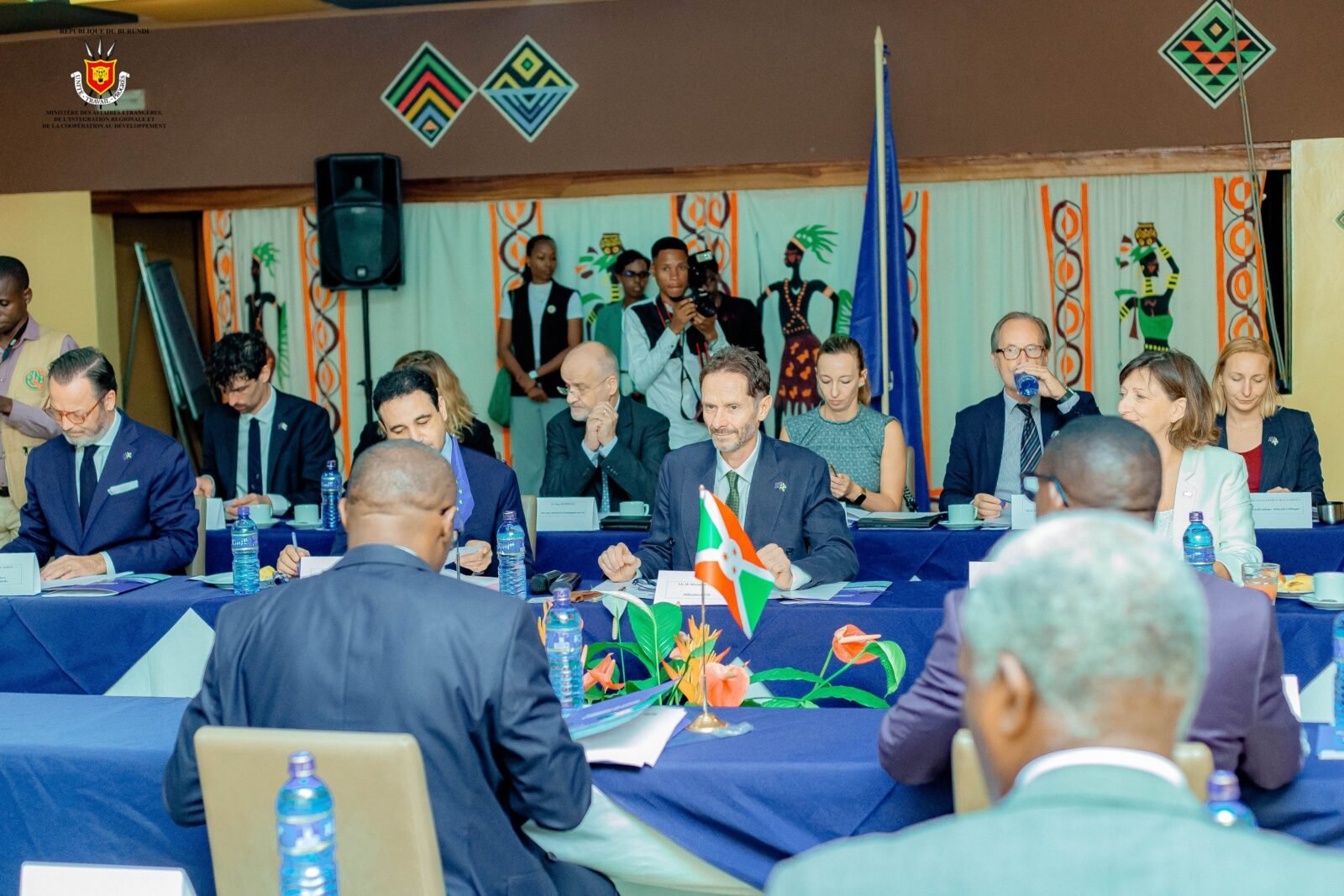
Burundi’s Foreign Affairs and Development Cooperation Minister, Edouard Bizimana, announced the development on Friday following a meeting in the economic capital Bujumbura with the European Union’s ambassador to Burundi, Alessandro Villa.
The meeting marked a renewed step in discussions between the two sides, which had not held this type of dialogue for several years, according to Bizimana.
“We have had fruitful discussions on various development and security issues, as well as other areas of cooperation, including refugees and preparations for climate-related challenges such as El Niño. We agreed that dialogue must continue so that we can move forward with our cooperation,” Bizimana told journalists after the meeting.
The discussions come as Burundi seeks to restore direct financial assistance from the EU, which suspended direct financial support to the government in 2016 following its decision to invoke Article 96 of the Cotonou Agreement in response to the political and human rights crisis that followed Nkurunziza’s controversial decision to seek a third presidential term in 2015.
However, the resumption of direct budget support is not yet guaranteed. Bizimana said both sides would need to continue discussions and reach an understanding on the terms of a renewed cooperation framework before such assistance could resume.
“After a few years of minor misunderstandings, it has become necessary for both parties to agree on a new path of cooperation,” he said, referring to the EU’s Global Gateway strategy as a possible framework for supporting development projects.
Bizimana described Global Gateway as a new approach to cooperation between the EU and African countries, aimed at supporting development through investment and partnerships.
He also referred to the Samoa Agreement, which replaced the Cotonou Agreement as the legal framework governing relations between the EU and the Organisation of African, Caribbean and Pacific States (OACPS). Burundi signed the agreement in November 2023.
The agreement provides a framework for cooperation in areas including human rights, democracy and governance, peace and security, economic development, climate change, migration, education and social development.
Speaking after the meeting, Ambassador Villa said discussions had covered economic and political issues, as well as the broader partnership between Burundi and the EU.
He said the transition from the Cotonou framework to the Samoa Agreement reflected changes in the political and institutional framework governing EU cooperation with partner countries.
“The partnership framework has evolved, and this has also changed the way the European Union’s system is organised. The system never stopped during these years, but the instruments used in the past have changed,” Villa said.
EU restrictions lifted in 2022
The latest discussions come against the background of an important policy change in February 2022, when the EU Council formally lifted the restrictions imposed in 2016, allowing the bloc to resume direct financial assistance to Burundi’s government and institutions.
The decision followed what the EU described as progress in the political process after the 2020 elections, as well as improvements in human rights, governance and the rule of law. However, the bloc said challenges remained in these areas.
Despite the lifting of the restrictions, the latest discussions suggest that the practical arrangements for renewed direct budget support remain an issue between the two sides.
Since the 2016 suspension, EU-funded development and humanitarian programmes have continued in Burundi, with assistance channelled through international organisations and other implementing partners rather than directly through government institutions.
Villa declined to give his assessment of the current human rights situation in Burundi, which was among the main reasons behind the 2016 decision. He said, however, that the issue had been openly discussed during the meeting because it remained important to both parties.
Bizimana also disclosed that the EU had financed development and investment projects in Burundi worth approximately 650 million euros, without specifying the period covered by the funding.
Whether the renewed dialogue will lead to the effective resumption of direct budget support remains to be seen.