
The World Food Programme (WFP) plans to reduce assistance to Congolese refugees in Burundi from 75% to 50%, a UN refugee agency official said, prompting concern among refugees who say they are already struggling to meet their basic needs.
Brigitte Mukanga-Eno, the UN Refugee Agency (UNHCR) representative in Burundi, told local newspaper IWACU that WFP had informed the government, through the National Office for the Protection of Refugees (ONPRA), of the planned reduction.
“WFP recently notified us, as well as the government through ONPRA, that there will be a reduction in this assistance, from the 75% that refugees have received up to now to 50%,” Mukanga-Eno said.
She said the reduction was linked to financial difficulties facing humanitarian agencies.
The move comes as Burundi continues to host tens of thousands of Congolese refugees who fled renewed fighting in eastern Democratic Republic of Congo.
Thousands of Congolese crossed into Burundi at the end of 2025 following an escalation of fighting in South Kivu, particularly around Kamanyola, Luvungi, Katogota and Uvira, amid clashes involving Congolese government forces and the M23 rebel group. The influx triggered a new humanitarian emergency in Burundi, where aid agencies are also facing funding shortages.
Refugees Fear Worsening Conditions
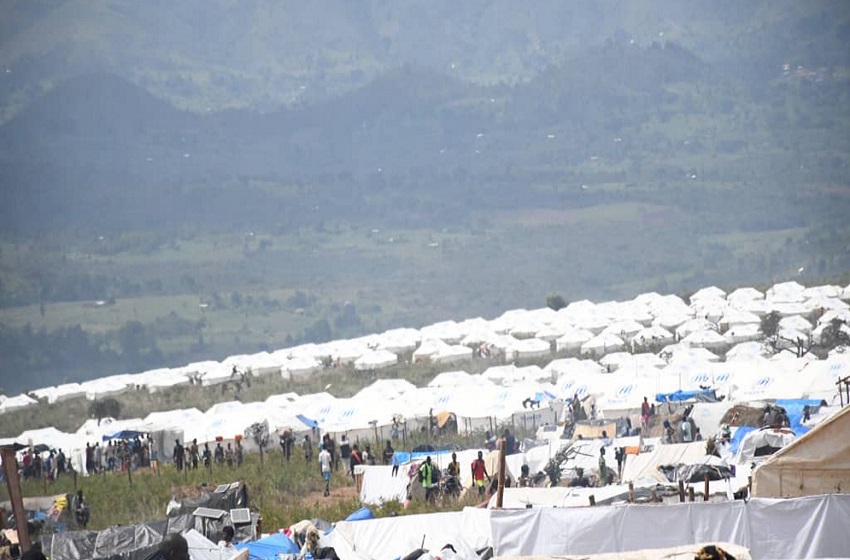
Refugees in the Busuma camp in eastern Burundi said they feared the reduction would further worsen their living conditions.
“We are already aware of it,” one refugee said. “Before, we were receiving 38,000 Burundian francs, but we have learned that we will now receive only 13,000 BIF.”
Another refugee said the amount would not be enough to cover basic needs for a month.
“What will 13,000 BIF be enough for over 30 or 31 days?” the refugee said, calling for assistance to remain at 38,000 BIF.
Mukanga-Eno said the reduction was particularly difficult given the emergency situation facing the refugees.
“This is a difficult situation to accept at the moment because it does not meet the criteria, especially in an emergency situation. Generally, in an emergency, we maintain 100%,” she said.
UN Agencies Seek More Funding
UNHCR is working with WFP to seek additional funding through a joint inter-agency appeal, Mukanga-Eno said.
“Discussions are underway, and in the days to come, the situation could improve,” she said.
She said major gaps remained in the humanitarian response, including shelter and education.
More than half of the refugees in Busuma are still living in poor conditions, while about 70% of the funding required under the humanitarian appeal remains unfunded, she said.
The number of Congolese refugees in Burundi has fallen from more than 66,000 to about 54,000 following repatriations, Mukanga-Eno said.
But she said the needs remained substantial, particularly for children who need access to education as the new school year approaches.
“There is no support for the education of these children,” she said.
Mukanga-Eno also called for support for income-generating activities for young refugees, saying such programmes could help reduce their dependence on humanitarian assistance.