
Burundi President Évariste Ndayishimiye has accused some police officers on Thursday of accepting bribes and failing to uphold professional standards, saying corruption within the force is undermining public security and public order.
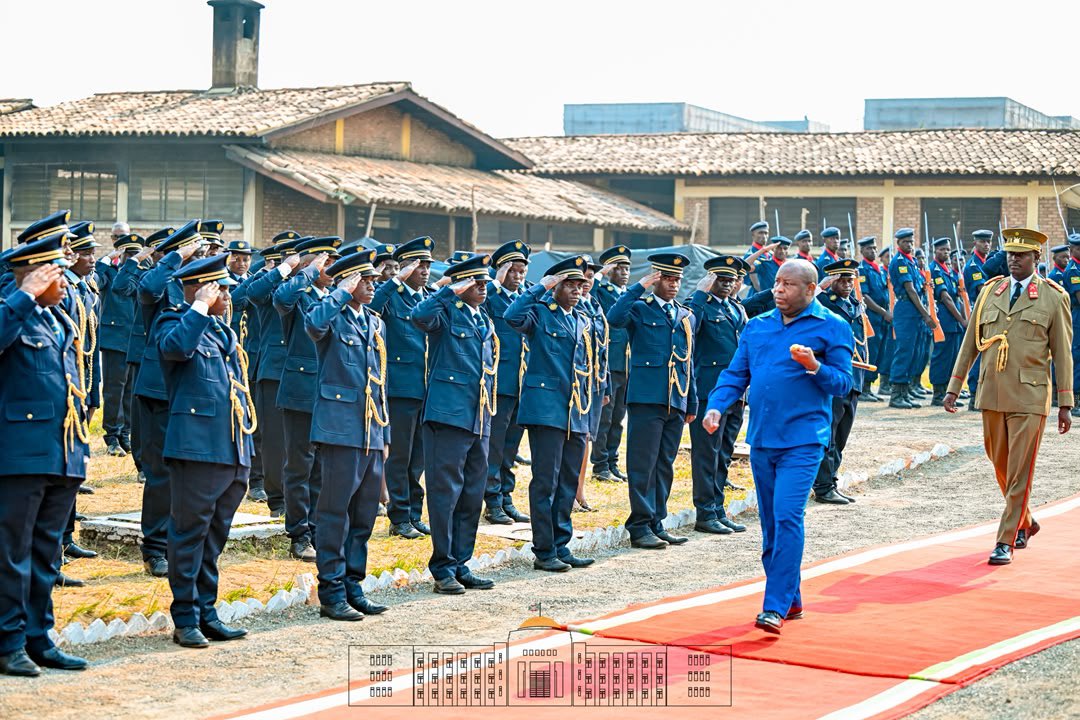
Speaking at a ceremony marking the commissioning and graduation of police officers and the opening of the 2025–2026 academic year at the Higher Police Institute in Mitakataka, Bubanza Commune, Bujumbura Province. Ndayishimiye said some officers were protecting people who disrupt public order in exchange for bribes.
“There are those who protect people who disturb public order,” the president said, according to remarks delivered during the ceremony. “Public order is violated in full view of police officers, and some of them are corrupt.”
Ndayishimiye cited what he described as routine bribery by traffic police stationed on the two bridges over the Ntahangwa river in the commercial capital, Bujumbura. He alleged that officers conducting late-night roadside checks on Fridays, Saturdays and Sundays accepted payments from motorists, including drivers suspected of driving under the influence, instead of enforcing the law.
“They claim they are checking for drunk drivers to ensure road safety, but they are only looking for money, and they let intoxicated drivers go because they pay them,” he said.
The president warned senior police officers responsible for areas where such practices occur, saying they would be held accountable if the misconduct continued.
His remarks came as Burundi has experienced a series of market fires in recent days. Ndayishimiye linked the fires’ impact to corruption, alleging that officials had accepted bribes to allow the construction of market stalls in access routes needed by emergency services.
“It is difficult to respond to fires in markets because those who build in the passageways bribe the officials who should prevent such construction,” he said.
Corruption has long been cited by civil society groups and governance experts as a major challenge in Burundi, despite repeated government commitments to address it. The country adopted a national anti-corruption strategy in December 2025, but analysts say graft remains widespread across public institutions.
Ndayishimiye has repeatedly denounced corruption during his presidency, describing it as one of the country’s most difficult governance challenges.
Corruption remains a major governance challenge in Burundi, which ranks among the lowest-performing countries in East Africa on Transparency International’s Corruption Perceptions Index. The country scored 17 out of 100 and ranked 167th out of 182 countries in the latest index. Within the East African region, Burundi trails Rwanda, Tanzania, Kenya, Uganda and the Democratic Republic of Congo, reflecting persistent concerns over public-sector corruption despite government pledges to address the problem.