
Two prominent non-governmental organizations have voiced strong opposition to a recently announced measure by the ruling party, CNDD-FDD, that would prohibit the use of mobile phones by public sector employees during working hours.
PARCEM and OLUCOME, have urged the government to prioritize more pressing national issues instead of enforcing what they describe as an impractical and misdirected policy.
According to PARCEM, the ban fails to address the country’s urgent economic and social challenges, including rising inflation and shortages of essential goods. Speaking on behalf of the organization, its director Faustin Ndikumana questioned the relevance of the measure in the current context.
“With soaring food prices, a fuel crisis, shortages of fertilizer, and limited access to water and electricity—contributing to the spread of diseases like cholera—can such a measure really be considered a meaningful solution?” he asked.
Ndikumana argued that regulating phone use in public offices is not a new concept and should instead be handled through internal professional guidelines rather than outright prohibition. He also stressed that mobile phones have become essential tools for communication and coordination, particularly for officials working in the field.
PARCEM further warned that implementing the ban would be difficult, if not impossible, given the central role mobile phones play in modern administrative work. Ndikumana highlighted that public officials, including ministers, are often required to remain accessible to citizens, making phone use indispensable.
He also raised concerns about unequal enforcement, suggesting the policy might disproportionately affect lower-ranking employees while senior officials continue to use mobile devices without restriction.
“It is hard to imagine a senior executive, a minister, or a military general giving up their phone at work,” he noted.
Ndikumana called for a more nuanced, profession-specific approach, adding that sectors such as healthcare, education, journalism, and security all rely heavily on mobile communication.
Criticism From Anti-Corruption Advocates
The measure has also been criticized by Gabriel Rufyiri, president of the anti-corruption watchdog OLUCOME. Speaking at a press conference, Rufyiri argued that the policy appears to lack broad consultation and clear implementation mechanisms.
“These decisions seem to be driven by a single individual and adopted without proper debate,” he said, adding that authorities had failed to explain how the ban would be enforced.
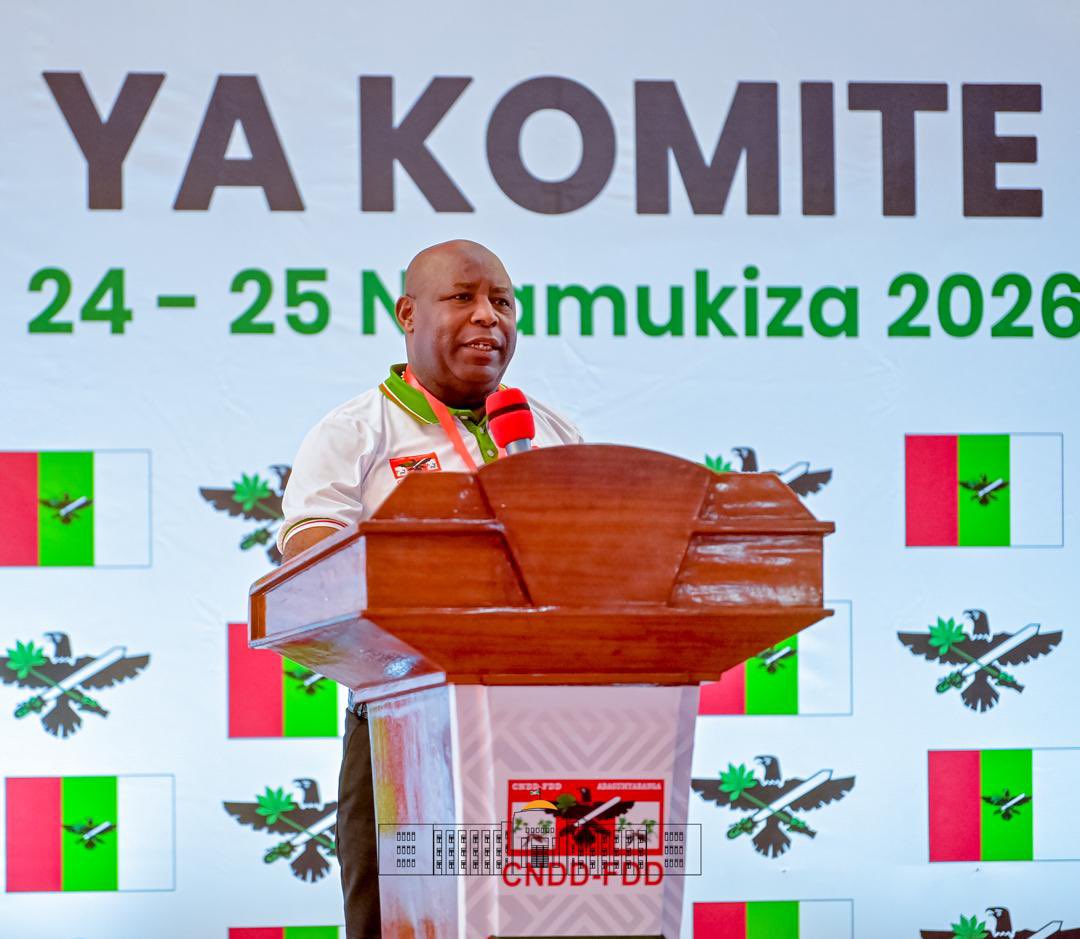
The controversial measure was announced by President Évariste Ndayishimiye following an extraordinary congress of the CNDD-FDD held from April 24 to 26 in the country’s political capital Gitega. The congress also confirmed Ndayishimiye as the party’s candidate for the 2027 presidential election.
In a statement read by party official Doriane Munezero, the party said the decision was intended to improve compliance with working hours, aligning Burundi with practices in more developed countries.
The proposal has also drawn criticism from public employees themselves. One teacher from Bubanza commune described the measure as “a return to the Middle Ages.”
“Mobile phones are essential for our work,” he said, noting their use in accessing reports and conducting online research. “For teachers, they are also teaching tools. I don’t see how we can function without them.”
Both PARCEM and OLUCOME say the government should focus on more concrete and impactful reforms to address Burundi’s economic and social challenges, rather than symbolic measures that may prove difficult to enforce and of limited benefit.