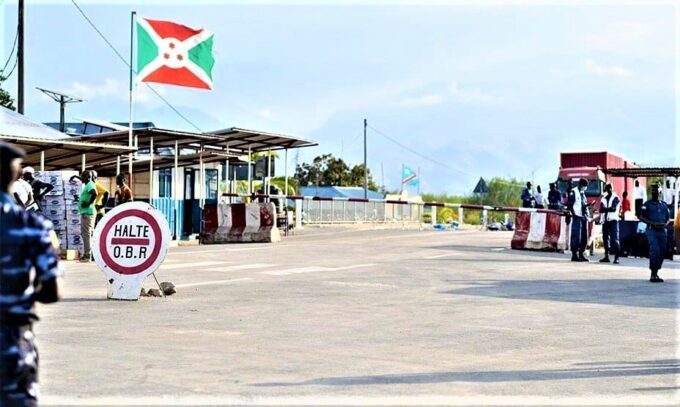

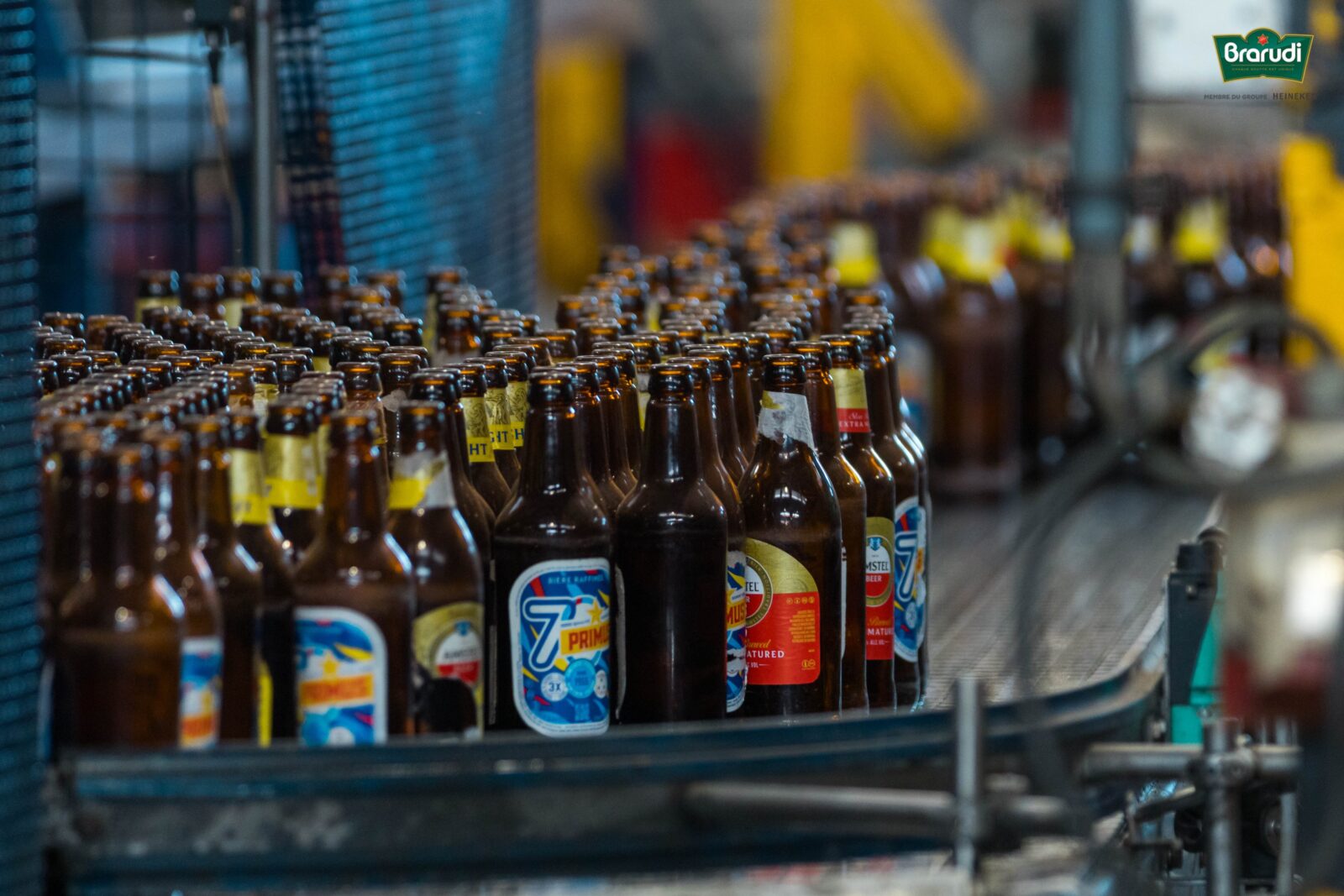
Burundi’s biggest brewery, BRARUDI, has publicly acknowledged exporting some of its beverages to neighbouring Democratic Republic of Congo, saying the move is necessary to generate foreign currency and keep the company operating.
The admission by BRARUDI’s Director of Institutional Affairs, Jennifer Nkurunziza, ends years of speculation that exports to the DRC were contributing to shortages of beer and soft drinks on the Burundian market.
“Our beers go to Congo, and this is known and organized accordingly,” Nkurunziza told journalists in the country’s economic capital Bujumbura earlier this week
She said BRARUDI would struggle to continue production without the foreign currency earned through exports.
“If our beers were not going to DR Congo, where we earn some foreign currency, not a single beer would be produced here in Burundi,” she said.
The comments come as bars and shops in Burundi continue to report shortages of beer and other beverages, including Fanta, fuelling price speculation. Some bar owners say supplies have become increasingly limited, leaving consumers struggling to find drinks.
BRARUDI, like many businesses in Burundi, has been hit by a shortage of foreign currency, which has made it difficult to pay for imported raw materials and other inputs needed for production.
“Every month, for the company to operate properly, we need $8 million. But now, it is very difficult to obtain that money,” Nkurunziza said.
She recalled that the company suspended some activities for about two weeks in 2024 because it lacked the resources needed to operate, prompting fears that the brewery had shut down.
The company has since continued operating, although supplies remain constrained.
Exports seen as necessary
Nkurunziza said BRARUDI’s decision to export was also driven by the substantially higher prices its products can fetch in the DRC.
She cited Amstel beer as an example, saying a bottle sold in the DRC could generate revenue equivalent to the price of three bottles sold in Burundi.
“People here complain that they cannot get enough beer. But they should understand that when one Amstel is sold in Congo, it generates the equivalent of the price of three Amstels sold within Burundi,” she said.
BRARUDI has faced mounting criticism after raising prices for its beverages, citing higher production costs, including raw materials, packaging and transportation. Trade associations have described the increases as excessive and unilateral at a time when many Burundians are struggling with low purchasing power.
Nkurunziza said the company nevertheless had limited options if it was to remain operational.
“We want our citizens to get the beer they need before we think about exporting it,” she said. “But there are choices and certain decisions that have to be made so that we can continue operating.”
She compared the situation to producing only as much as available funds allow, saying some beverages require numerous imported ingredients.