
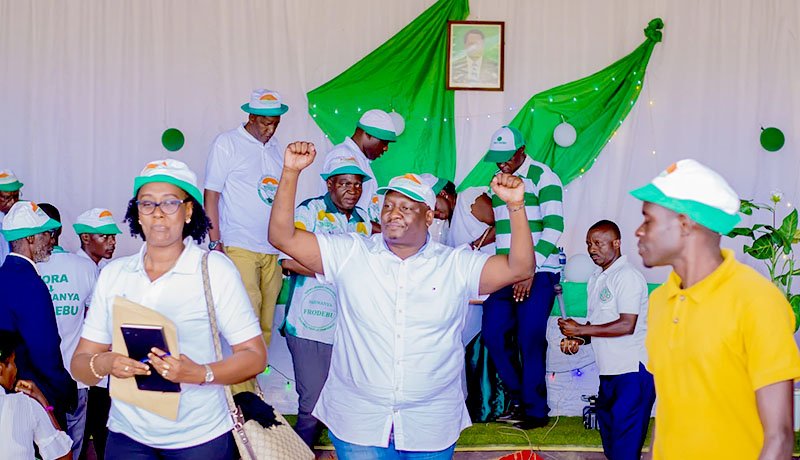
Burundi’s opposition party Sahwanya-FRODEBU has said it will not field a candidate in the May 2027 presidential election, citing a lack of assurances that alleged irregularities in last year’s parliamentary and local elections would be addressed.
The party announced its decision in a statement issued late last week following a meeting of its national delegates’ council, saying discussions with government leaders, the interior ministry and the Independent National Electoral Commission (CENI) had failed to provide assurances of improvements to the electoral process.
“None of the discussions … provided any reassuring elements or any hope that the current situation could change,” the party said, adding that Burundi’s pressing social and political problems were more urgent than participating in an election it feared would resemble the 2025 polls.
Burundi held parliamentary and communal council elections in 2025, in which the ruling CNDD-FDD secured all seats, according to the source account. Opposition parties alleged irregularities in the conduct of the vote.
The decision comes as political parties position themselves ahead of the presidential election scheduled for May 3rd, 2027.
The ruling CNDD-FDD designated President Evariste Ndayishimiye as its candidate in April 2026. The FNL party, considered close to the authorities, said in September it would support the ruling party’s candidate.
Other parties have also announced candidates, including Gabriel Banzawitonde of the APDR, Gaspard Kobako of AND-Intadohoka, Abel Gashatsi of UPRONA, Francis Rohero of the FPI and Valentin Kavakure of FPN Imboneza.
Responding to Sahwanya-FRODEBU’s decision, CENI spokesman Francois Bizimana told the BBC he did not understand why the party had chosen not to field a candidate.
The decision was not, in itself, a way to win an election that had yet to take place, Bizimana said, adding that the electoral commission planned to meet representatives of all 37 political parties to discuss election-related issues.
Sahwanya-FRODEBU was founded in 1992 by Melchior Ndadaye, who became Burundi’s first democratically elected president after winning the June 1993 election. He was assassinated in an attempted coup in October that year, triggering a period of escalating ethnic violence that preceded a civil war lasting more than a decade and killing hundreds of thousands of people.
In its statement, Sahwanya-FRODEBU said it remained committed to seeking lasting solutions to the country’s problems and helping create conditions for credible elections that would reassure both winners and losers.