
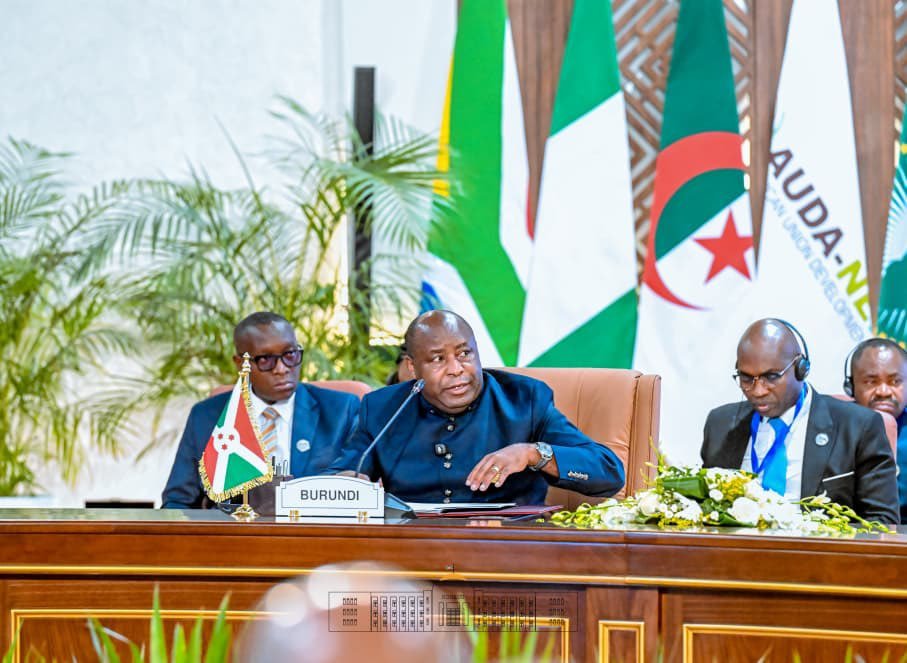
Burundi has agreed to receive migrants deported from the United States under an arrangement with the administration of President Donald Trump, President Evariste Ndayishimiye said, making it the latest African country to accept people expelled by Washington.
The timing and number of migrants expected to arrive in Burundi remain unclear.
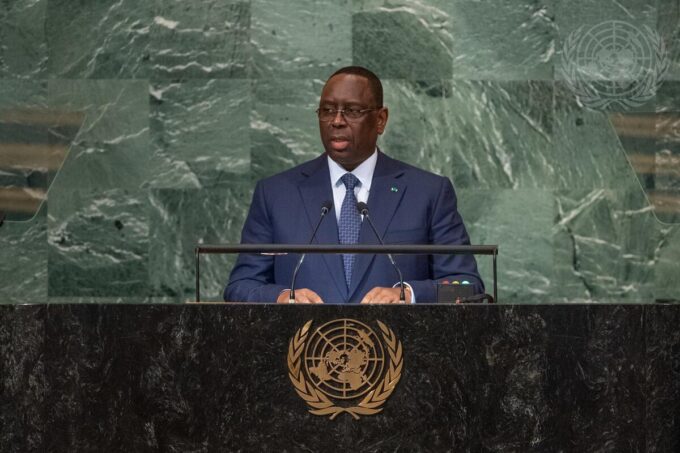
Ndayishimiye said in an interview with France’s state-funded news channel France 24 in September that Burundi had reached an agreement with the United States to receive migrants deported from the country, citing Burundi’s tradition of hospitality.
“Burundi is a welcoming country. We welcome all migrants, and that does not bother us,” Ndayishimiye said. “But what we do not want is to bring criminals. That is what we asked of the United States.”
The president said Burundi was prepared to grant asylum to migrants who were not criminals and did not wish to return to their home countries.
“Burundi has accepted this request from the United States. Even migrants who do not seek asylum through the United States, we welcome them, except terrorists and criminals,” he said.
Ndayishimiye also denied that the United States had offered Burundi funding in exchange for accepting the migrants. He said the International Organization for Migration (IOM) would be responsible for managing the migrants and that financial arrangements were therefore not part of the agreement.
Burundian presidential spokesperson Nancy Ninette Mutoni reiterated the government’s position this week during a public conference in Ngozi, northern Burundi, saying preparations were under way for the migrants’ arrival.
“We are preparing for their reception, because this requires very careful preparations,” Mutoni said, adding that the agreement would strengthen Burundi’s relations with other countries.
She said migrants would receive support to facilitate their integration and coexistence with local communities, in accordance with Burundian laws, values and culture. Those who requested it could potentially obtain Burundian nationality under the country’s laws, she said.
Mutoni said authorities were still working on arrangements concerning accommodation and the migrants’ livelihoods.
Burundi is among a growing number of African countries that have agreed to receive migrants deported by the United States. Media reports have said that at least 25,000 migrants have been deported by Washington to third countries.
The United States’ policy of transferring deported migrants to countries other than their countries of origin has drawn criticism from human rights groups.
Maria Serrano, a researcher with Amnesty International, said that such arrangements raised concerns about people being transferred against their will and, in some cases, detained without access to the outside world or legal representation.
Burundi is already hosting thousands of refugees from neighbouring Democratic Republic of Congo who fled fighting in eastern Congo. Many are staying at the Busuma camp in eastern Burundi after crossing the border since the escalation of conflict in 2025.
Other African countries have also agreed to receive deported migrants under arrangements with the United States. They include Eswatini, which has agreed to receive Vietnamese migrants, Democratic Republic of Congo, which is expected to receive Colombians, and Ghana, which has agreed to host Guineans.
The agreements form part of the Trump administration’s broader efforts to expand deportations and secure arrangements with third countries to receive migrants who cannot, or do not, return directly to their countries of origin.