
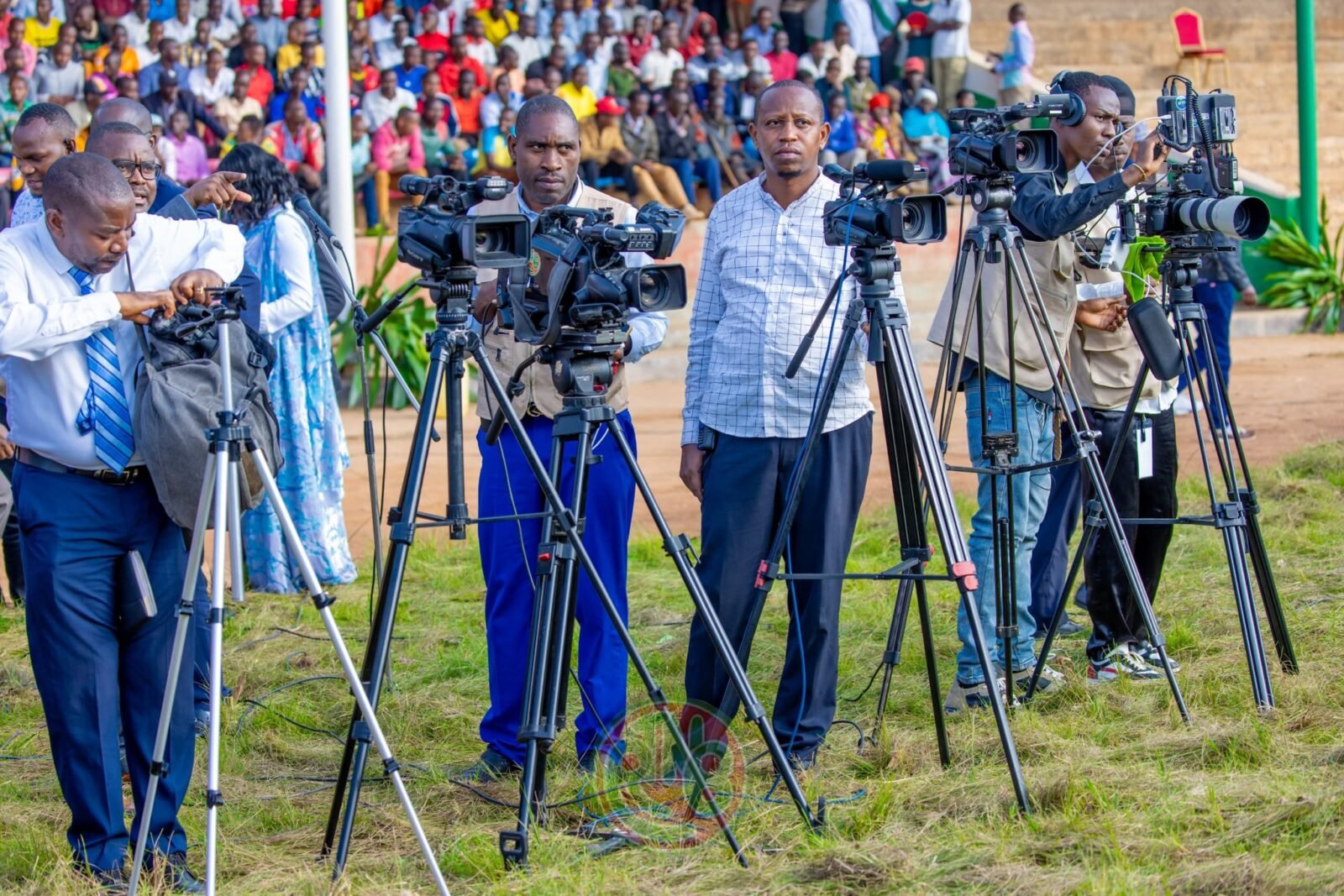
In Burundi, working as a journalist increasingly means trying to do a demanding job with inadequate pay, unreliable electricity, limited equipment and difficult access to information.
Across public and private media houses, journalists and media managers describe an industry struggling under the weight of the country’s wider socio-economic difficulties. Rising living costs, fuel shortages, unreliable internet connectivity and declining advertising revenues are combining to make ordinary journalistic work more difficult—and, in some cases, raising questions about the sustainability and independence of the profession in the East African nation.
The consequences are felt not only by journalists themselves, but also by the audiences who depend on them for timely and independently produced information.
When journalism no longer pays enough to live
For many journalists, the most immediate problem is income.
A senior journalist at the public broadcaster (RTNB), who requested anonymity, says salaries in public media are barely sufficient to meet basic needs.
“Yes, it is really a very serious problem,” the journalist says. “In public media, it is practically the same as elsewhere. In private media, there may be some advantages, particularly through cooperation with international organisations, which can give them more opportunities to develop.”
The journalist says the consequences go beyond financial inconvenience.
“It affects health, transportation, the ability to provide for your family and even professional development. A salary of less than $50 is practically impossible to live on properly. It is almost a miracle to survive on such an income.”
The problem is not limited to radio.
A journalist at Le Renouveau –– a government-aligned daily newspaper–– who also requested anonymity, says the rising cost of living is putting additional pressure on journalists.
The journalist points to the country’s fuel crisis and the rising cost of basic goods as factors making it increasingly difficult for journalists to work.
“If urgent measures are not taken, journalism will continue to decline,” the journalist says.
There is also a potential ethical consequence, the journalist argues: when journalists struggle to meet basic needs, financial dependence can create vulnerabilities that affect professional independence.
“We risk seeing a journalist produce a report based on the person who gave them something to eat, rather than being guided by the principles and ethics of the profession.”
The concern, the journalist says, applies to both public and private media.
Willy Kwizera, a journalist with Radio Bonesha, describes a similar experience.
“The high cost of living affects me enormously and prevents me from doing my job as I should. Difficulties with transportation disrupt my work, while problems with telecommunications make the situation worse. The internet no longer seems to work properly. All these problems significantly disrupt my professional activities.”
The unpaid journalist
The situation can be even more precarious in some private media organisations.
Some journalists begin as interns and remain long after the recognised internship period of six months has expired, hoping eventually to be offered a contract.
In the absence of a formal employment agreement, it can become unclear whether such workers should be considered interns, freelancers, volunteers or employees.
For some, the possibility of receiving occasional per diems for covering events or attending workshops becomes one of the few financial incentives keeping them in the profession.
Armel Mugisha, a journalist at a private radio station, says he initially completed a three-month internship before extending it for another three months.
“I did a three-month internship, then renewed it for another three months. Hoping that one day I would get an employment contract, I have continued. I have spent six months working in programming without receiving even a franc, but I still report for duty whenever I am scheduled.”
Such arrangements raise a broader question about the sustainability of journalism as a profession.
A journalist who spends months or years working without a stable salary may have little opportunity to invest in professional training, transportation, equipment or the time required for more ambitious reporting.
The result can be a cycle: poor working conditions limit the quality and scope of journalism, while weak journalism can make it harder for media organisations to attract audiences, advertising and sustainable funding.
From training room to newsroom
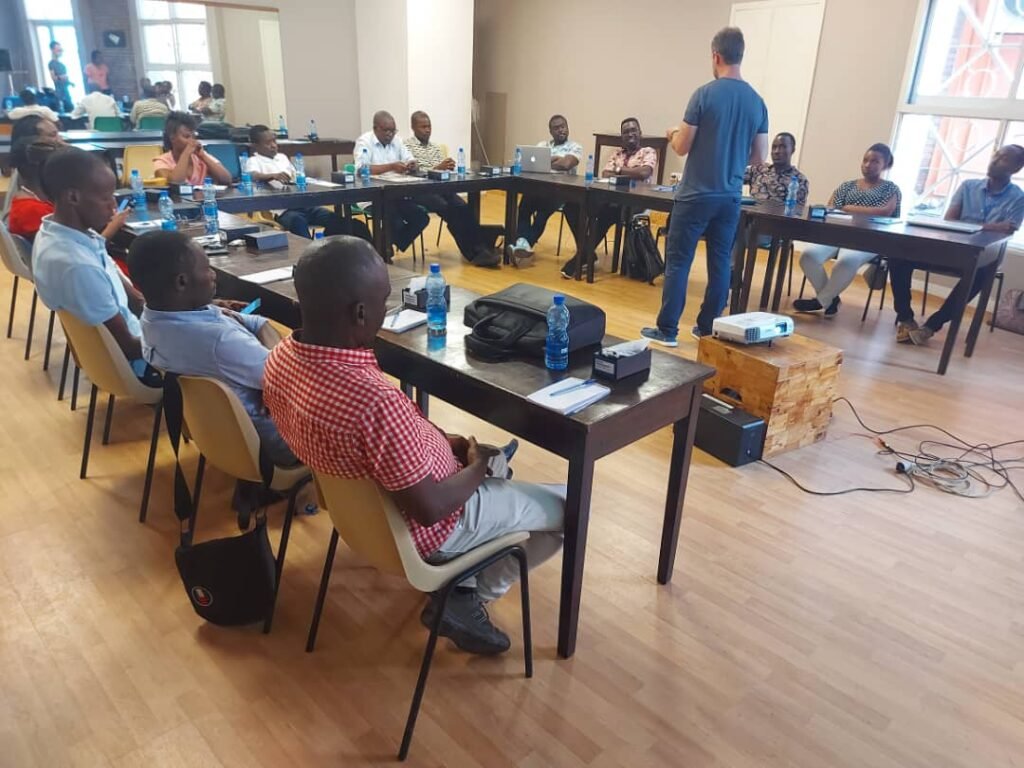
Another challenge is professional training.
Some journalists working in private media have never received formal journalism education. Others enter the profession after completing academic or post-basic education, driven by interest or passion rather than specialised training.
Training opportunities do exist, including workshops organised by media organisations and other partners. But journalists say training does not necessarily translate into better journalism if newsrooms lack the resources needed to apply what participants have learned.
A journalist may, for example, receive training in investigative reporting but have no transport money to travel to the field, no recorder, no camera and insufficient internet access to conduct research or communicate with sources.
This creates a gap between knowing how journalism should be done and having the resources to actually do it.
In poorly resourced newsrooms, journalists may therefore fall back on readily available material, including statements and speeches by public officials, rather than undertaking time-consuming original reporting.
Electricity: a newsroom’s basic infrastructure
For radio stations, electricity is not merely a convenience. It is fundamental infrastructure.
Burundi’s electricity shortages have forced some broadcasters to interrupt programmes or reduce their broadcasting hours.
At Radio Izere FM in Rumonge, southern Burundi, director Egide Nkuriyingoma says the station can sometimes spend up to 24 hours without electricity.
Solar panels provide some assistance, but not enough to guarantee continuous broadcasting.
“Since these panels cannot provide all the energy we need to continue broadcasting, sometimes we have to close the station at 10 p.m. instead of 11 p.m. to protect our equipment,” Nkuriyingoma says.
The station has also turned to satellite internet.
Nkuriyingoma says Radio Izere FM acquired a Starlink connection at a cost of about four million Burundian francs.
The investment illustrates the dilemma facing media organisations: maintaining basic operations increasingly requires expensive technological solutions at a time when revenues are already under pressure.
Some media managers also say importing equipment is difficult and expensive because of customs charges and limited access to foreign currency.
One media source, who requested anonymity, alleged that some operators have resorted to using false invoices to manage the cost of importing Starlink equipment.
That allegation would require independent verification.
A digital newsroom without digital resources

The equipment problem extends beyond electricity and internet access.
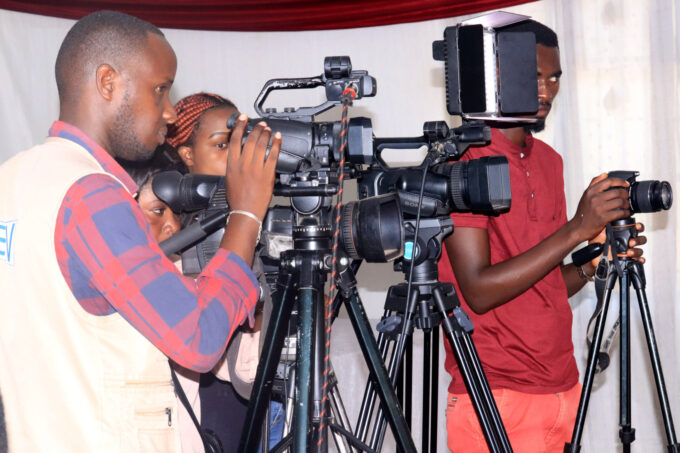
Modern journalism requires computers, audio recorders, cameras, microphones, batteries, storage devices, lighting equipment and specialised software. Yet many Burundian media organisations lack the financial resources to purchase and replace such equipment.
Guillaume Muhoza, CEO of the online outlet Iris News, says financial constraints are one of the biggest obstacles facing the sector.
“The main problem is that media organisations have very limited financial resources, while the equipment required for modern journalism is expensive.”
Muhoza says many media organisations depend on advertising, partnerships and externally supported projects.
But economic difficulties have also affected advertisers.
“Today, because of the economic difficulties the country is experiencing, many companies and commercial businesses have reduced their advertising and media-support budgets. This results in lower revenues for media organisations, even as their number increases and their material needs continue to grow.”
The problem is compounded by the fact that many types of professional equipment are not readily available locally.
Cameras, microphones, computers, batteries, storage drives, lighting equipment and software often have to be imported and purchased in foreign currency.
“Because of the difficulties in accessing foreign currency, it becomes very difficult to acquire them, and even when we manage to obtain them, their cost can be very high,” Muhoza says.
A shrinking pool of external support
For years, international organisations and development partners have played an important role in supporting parts of Burundi’s media sector.
But that support has declined substantially compared with previous years, particularly since 2015, when unrest erupted after the ruling party, CNDD, announced that then-President Pierre Nkurunziza would seek a controversial third term in office, prompting international donors to suspend financial assistance to the country.
Some projects have ended, while others have been scaled back.
That has left media organisations more dependent on their own commercial resources—at precisely the time those resources are becoming harder to generate.
For smaller outlets, the loss of external support can affect not only salaries but also equipment purchases, training, field reporting and the ability to maintain digital infrastructure.
The resulting financial pressure is therefore not simply a business problem. It can shape what journalism is possible.
When a power cut becomes a news delay
For an online media organisation, an electricity outage can immediately become an information outage.
Muhoza says almost all of Iris News’ activities depend on internet connectivity.
“When the electricity is cut, the internet connection is often interrupted as well. This considerably slows down our work. An article that should have been published immediately can be delayed for several hours. An interview can be interrupted or even cancelled. Urgent information can reach us without us being able to transmit it to readers on time.”
For radio stations, the consequences can be even more direct: no electricity can mean no broadcast.
Some stations have responded by using generators or solar panels. But generators require fuel and maintenance, while solar systems have limited capacity.
In some cases, journalists reportedly rely on small generators that have been in use for years and are increasingly prone to breakdowns.
Solar panels donated to some media outlets by the organisation La Benevolencia can provide enough electricity in favourable weather to power a few laptops, but may not be sufficient to run a radio transmitter for extended periods.
The result is a newsroom operating around the availability of electricity rather than around the demands of the news cycle.
The smartphone newsroom
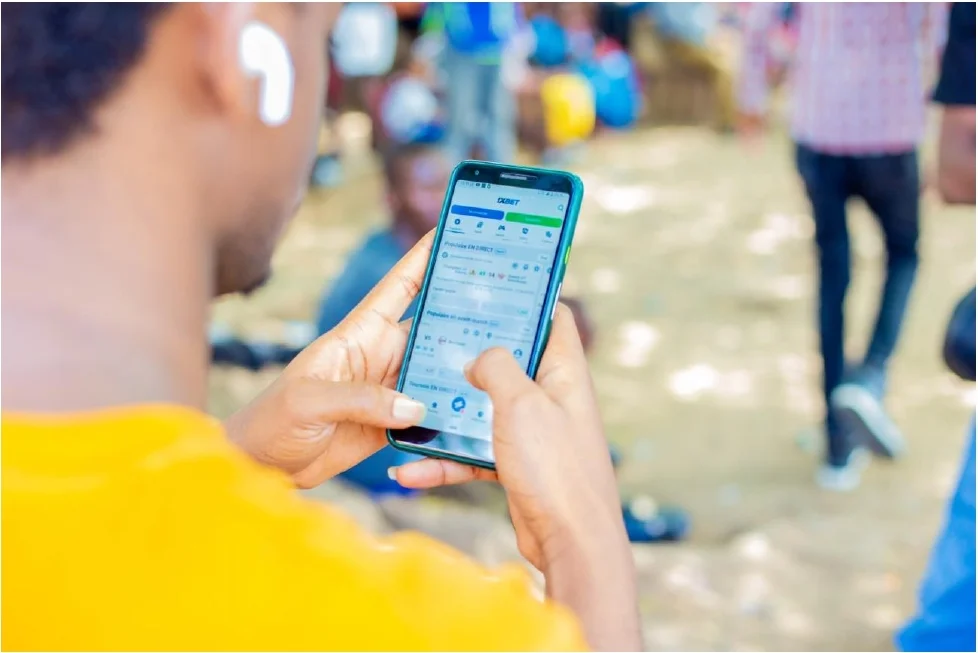
With professional equipment out of reach, some journalists have adapted by using what they already possess: Android smartphones.
Phones can record interviews, capture photographs, shoot video and transmit material to newsrooms.
The technology has lowered some barriers to producing content, but it has also blurred distinctions between professional journalists, citizen communicators, influencers and other online content producers.
This distinction becomes particularly complicated on platforms such as YouTube, where anyone can produce and distribute interviews or commentary.
Some journalists say public officials and other potential sources are sometimes more willing to speak to YouTubers or online personalities than to conventional media reporters.
That creates a new competition for access and attention.
The issue is not simply whether a person has a camera or a YouTube channel. The deeper question is whether the content is produced according to journalistic standards: verification, independence, attribution, accountability and a willingness to scrutinise powerful actors.
Access to information: another barrier
Even when journalists have the technical ability to report, they still need access to sources.
Several journalists interviewed for this report described access to official information as a significant challenge, particularly on sensitive subjects.
Some officials, journalists say, provide interview appointments that are subsequently cancelled or never honoured. Others delay responses or decline to provide information.
The difficulty was also apparent during the reporting of this story.
For example, the Association of Women Journalists (AFJO) revealed that it did not have updated data on the representation of women in journalism in Burundi.
The absence of readily available, current data illustrates a wider problem: journalists cannot easily analyse trends in the industry when the institutions that could provide relevant information do not always have, publish or share up-to-date figures.
The result is a reporting environment in which journalists may have to rely heavily on individual interviews and anecdotal evidence.
That makes systematic investigation more difficult.
Investigative journalism squeezed out
All these pressures ultimately affect what kind of journalism gets produced.
Investigative journalism requires time, transport, data, equipment, reliable communications and, often, repeated attempts to obtain responses from officials and institutions.
A journalist who is struggling to afford transport or whose newsroom cannot finance field reporting has fewer opportunities to pursue a story over several days or weeks.
The economic model therefore influences the editorial model.
When resources are scarce, routine coverage can become more attractive because it is cheaper and faster. Press conferences, official speeches and organised events provide ready-made material.
Investigative reporting, by contrast, requires journalists to create their own reporting opportunities.
This is one reason why the health of a media industry cannot be measured only by the number of outlets operating in a country.
A country may have numerous radio stations, newspapers and online platforms while still having a limited capacity for sustained, independent investigative journalism.
A profession without a strong collective voice
The precarious working conditions are further complicated by weak collective representation.
According to journalists interviewed for this report, there is currently no active trade union representing journalists across the sector in the way a traditional professional union would.
The Burundian union of Journalists (UBJ) has historically played a role in defending journalists’ professional rights, but journalists interviewed for this story described limitations in collective representation.
Olivier Kwizera, a journalist at Radio Indundi Culture, says one consequence is felt when journalists’ professional rights are violated.
The sector does have professional networks, including the Burundi Economic Journalists Network, which focuses on journalists working on economic issues.
But professional networks and trade unions do not necessarily serve the same function. A professional network can provide training, contacts and knowledge-sharing, while a union traditionally focuses more directly on employment conditions, labour rights and collective bargaining.
The policy dilemma
The challenges facing Burundi’s media industry are known to the authorities responsible for the sector. But awareness has not necessarily translated into solutions.
One proposed response to the electricity problem came from REGIDESO, the state electricity distributor, which reportedly suggested that media organisations operate from a single building so that electricity could be supplied to them more easily.
The proposal reflects the scale of the infrastructure problem, but it also exposes another challenge: media organisations differ substantially in size, ownership, resources and operational needs.
Bringing them together would require a degree of financial and organisational capacity that some outlets may not possess.
More fundamentally, electricity is only one part of the problem.
Even if power became reliable tomorrow, journalists would still face low salaries, limited equipment, difficulties accessing foreign currency, declining advertising revenues, limited training opportunities and challenges obtaining information.
What happens when journalism becomes unsustainable?
Burundi’s media sector is therefore caught in a cycle of interconnected pressures.
Low salaries make it difficult to retain experienced journalists. Limited revenues make it difficult for media organisations to raise salaries. Expensive equipment limits reporting capacity. Electricity and internet disruptions slow production. Weak access to information makes investigations harder. Reduced donor support removes another source of financing.
And when journalism becomes financially precarious, professional standards can become harder to maintain.
The danger is not necessarily that journalism disappears altogether. It may be something subtler: a media landscape in which outlets continue to broadcast and publish, but with fewer resources for original reporting, investigative work and sustained scrutiny of powerful institutions.
The journalists interviewed for this story continue to work despite these constraints. Their persistence is itself evidence of the importance they attach to the profession.
But persistence alone cannot substitute for a functioning media ecosystem.
For journalism to serve the public effectively, journalists need more than the ability to speak into a microphone or post a story online. They need a living wage, reliable infrastructure, professional equipment, access to information, opportunities for meaningful training and institutional mechanisms capable of defending their professional rights.
Without those foundations, the question facing Burundi’s media industry is no longer simply how many journalists or media outlets the country has.
It is whether those journalists have the conditions necessary to do journalism at all.