

Burundi’s Senate has raised serious concerns over a growing wave of citizens leaving the country to seek employment abroad, particularly in Gulf nations, warning that the trend is draining the country’s public workforce and exposing migrant workers—especially women—to grave human rights abuses.
During a plenary session held Tuesday in Burundi’s political capital Gitega, senators described what they called an “alarming” exodus of public servants, including teachers, doctors, and nurses, abandoning their posts in search of better-paying jobs overseas.
Senator Sabine Ntakarutimana revealed that more than 140 teachers have already left their jobs in Gitega Province alone, many of them university graduates. She said the situation is similarly dire in the health sector.
“We see the same thing in the health sector: many doctors are leaving, and now even nurses are going,” Ntakarutimana said. “Do you not think that we will soon face serious problems? When we visit citizens, we find schools without teachers and health centers without staff. There should be strategies in place.”
Senator Leocadie Ndacayisaba echoed the concerns, warning of the social impact on children and families.
“Children are leaving school; people are leaving their jobs without even giving notice, resigning just to rush to Dubai or elsewhere to make money,” she said.
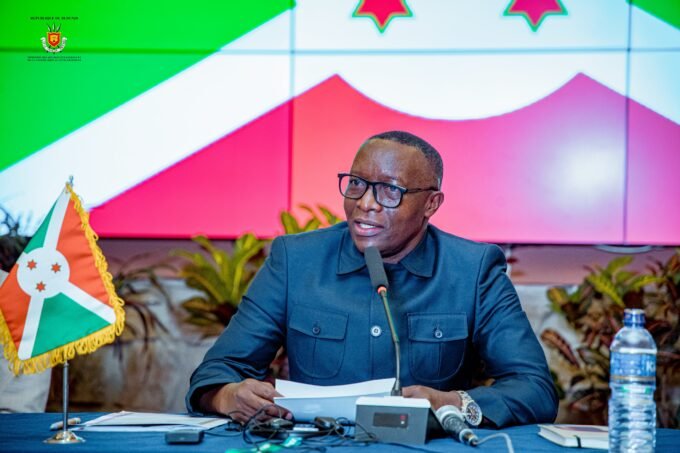
Responding to the senators, Minister of Foreign Affairs Edouard Bizimana who was a guest in the Senate acknowledged the scale of the problem but said the stabilization of civil servants falls largely outside his ministry’s mandate.
“Beyond a lack of patriotism—which also exists—it is also about salary policy,” Bizimana said. “We must ask whether salaries are adequate and motivating enough to encourage people to stay.”
Recruitment Agencies Under Fire

The debate also focused heavily on the treatment of Burundian migrant workers abroad, particularly women recruited for domestic work in Gulf countries.
Senator Ntakarutimana questioned the government on the implementation of bilateral labor agreements with countries such as Saudi Arabia and Qatar, citing persistent reports of abuse.
“There are associations here in Burundi that recruit women and girls to work in these countries,” she said. “From what we hear, they are not working under good conditions. What steps will be taken to demand better treatment?”
Her remarks come amid mounting criticism from local rights groups. In early 2025, ALUCHOTO and ONLCT reported widespread abuses against Burundian women working in the Gulf. ALUCHOTO’s national coordinator, Vianney Ndayisaba, said returned workers described extreme violence, including sexual abuse, torture, unpaid wages, and forced confinement.
“Many Burundians who go there are abused,” Ndacayisaba said during a press conference earlier this year. “Afterwards, recruitment agencies force them to repay travel costs, even though these conditions were never part of the agreement.”
According to the National Federation of Child Rights Organizations (FENADEB), at least 92 Burundian women suffered severe abuses in Saudi Arabia in 2025 alone.
Despite these reports, the Ministry of Foreign Affairs says labor migration has brought in significant revenue. A February 2025 ministry report indicates that more than 17,000 Burundian domestic workers have been deployed to Saudi Arabia over the past 18 months, generating about 10 billion Burundian francs and 10 million US dollars.
Poor Preparation and Illegal Agencies Blamed
Minister Bizimana acknowledged cases of beatings, non-payment, and even deaths among Burundian workers abroad, citing one instance in which a young woman was allegedly killed by her employer and dumped on the roadside.
He attributed many of the problems to poor preparation by recruitment agencies, cultural and language barriers, and the proliferation of unregistered brokers.
“One of the main problems is that many people are not well prepared before going to these countries,” Bizimana said. “It is very difficult to live and work in a place where you cannot communicate because you do not share a language.”
He said the government has licensed about 60 recruitment agencies, each required to pay significant accreditation and guarantee fees to ensure worker protection. However, at least 34 agencies are operating illegally.
“We instructed agencies operating outside the law to stop,” Bizimana warned. “If a worker you sent encounters problems, you will be responsible for everything that happens to them.”
Dubai Departures Spark Accountability Questions

Several senators questioned the legality and safety of young Burundians traveling to Dubai in the absence of a formal bilateral labor agreement.
“Our young people are leaving in large numbers through the airport every day,” Ndacayisaba said. “Since the government knows this and no agreement has been signed, how does this work in practice?”
Bizimana said the government now requires cooperation between accredited agencies in Burundi and destination countries to allow follow-up through diplomatic channels, even without formal inter-state agreements.
In December 2025, the ministry introduced a requirement that outbound workers obtain a personal identification form issued by a recruitment agency and validated by the ministry—a move officials say is meant to ensure worker protection. Critics, however, argue it restricts freedom of movement.
“If someone does not go through an agency but has a passport, a visa, and an air ticket—everything needed to travel—can that person not leave without going through an agency?”, Senator Gad Niyukuri asked.
Responding to those concerns, Bizimana insisted the government is not preventing anyone from traveling.
“We do not stop anyone from leaving,” he said. “We only say it is better to go through recognized channels so that, if you encounter a problem, it will be easier to help you.”
Facing criticism over alleged inaction, Bizimana defended the role of Burundian embassies, saying diplomatic staff often work around the clock to assist distressed workers.
He also said the government plans to establish legally compliant training centers, in partnership with recruitment agencies and destination countries, to prepare workers on language, culture, and labor rights before departure.
“We must work with host countries to enforce labor laws so that our citizens are not mistreated,” Bizimana said. “The goal is to ensure they return home safely and that the income they earn supports their families, not destroys their lives.”