
Burundian President Évariste Ndayishimiye has renewed calls for heightened security vigilance, warning that a neighboring country to the north is backing plans to destabilize and potentially attack Burundi.
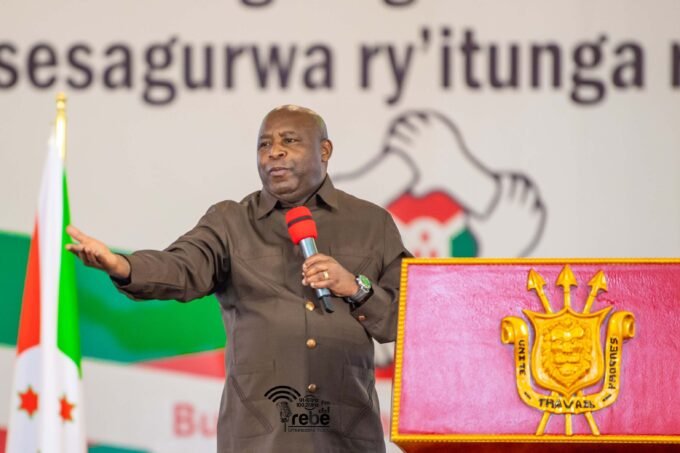
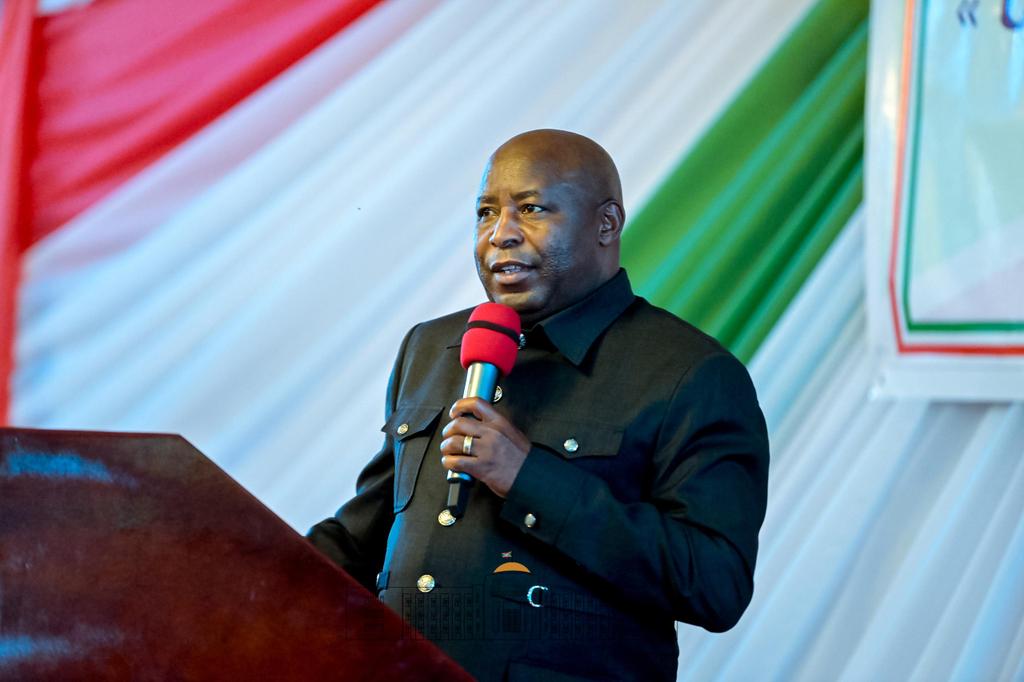
Speaking on Friday in Gitega — the country’s political capital — during a ceremony at which defense and security forces presented their New Year 2026 wishes to him, President Évariste Ndayishimiye accused what he described as a “bad neighbor” of supporting armed actors seeking to undermine Burundi’s stability. Although he did not explicitly name the country, his remarks were widely interpreted as referring to Rwanda, which Burundian authorities have long accused of seeking to destabilize the country.
“You know that we have a bad neighbor to the north of our country who does not wish us well,” Ndayishimiye said. “This neighbor continues to point fingers at us while pursuing a plan of destabilization in the neighboring DRC. To this day, that same neighbor continues to wish harm upon Burundi.”
The president accused the unnamed country of backing groups which intend to attack Burundi, warning that the nation remains alert and prepared to defend itself.
“This bad neighbor is the one who continues to support those who want to attack Burundi. Let them know that this country is vigilant. Burundi is not a country that can be trampled on,” he said, urging collective vigilance from both authorities and citizens. He added that anyone who instigates war against Burundi “will end up paying the price on their own soil.”
Regional tensions
The warning comes amid escalating tensions in the Great Lakes region, particularly following renewed fighting between the Democratic Republic of Congo (DRC) forces and the Rwanda-backed AFC/M23 coalition in South Kivu.
Burundi has repeatedly described Rwanda as a potential security threat, concerns that intensified after AFC/M23 briefly seized the Congolese town of Uvira earlier this year. Uvira lies just a few kilometers from Burundi’s economic capital, Bujumbura, raising alarm in Gitega. The situation led to the temporary closure of the Burundi–DRC border.
During the Uvira capture episode—an advance the rebels later withdrew from, reportedly following diplomatic pressure from Washington—Burundi accused Rwanda of launching bomb attacks on its territory that injured two children, according to the Minister of Foreign Affairs. Rwanda rejected the accusations, instead accusing the Burundian army of shelling civilian areas in Kamanyola, eastern DRC.
Diplomatic fallout and UN warnings
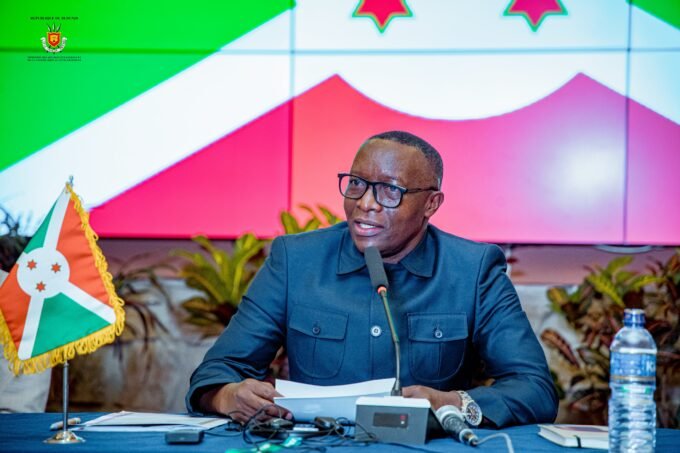
President Ndayishimiye’s remarks follow strong statements by Burundi’s Permanent Representative to the United Nations, Zéphyrin Maniratanga. During a UN Security Council briefing on MONUSCO last week, Maniratanga condemned what he described as provocative attacks threatening Burundi’s sovereignty and warned that Burundi would retaliate if attacked.
Despite the tense rhetoric, Rwanda’s Minister of Foreign Affairs, Olivier Nduhungirehe, has said that security officials from both countries had held bilateral talks over the weekend aimed at de-escalation.
“A meeting was held this weekend between the security services of the two states to discuss de-escalation,” Nduhungirehe told French public broadcaster France 24. “We believe that if these meetings continue, we will be able to agree on a way out, achieve regional de-escalation, and reactivate the peace agreements.”
However, similar dialogue efforts in the past have failed to yield lasting results. Earlier this year, Nduhungirehe had said intelligence chiefs from both countries were close to resolving the diplomatic standoff following talks held between February and March. That optimism faded after President Ndayishimiye publicly accused Rwanda of planning an attack on Burundi—claims Kigali described as “unfortunate” and harmful to ongoing negotiations.
Since early 2025, President Ndayishimiye has repeatedly vowed to respond forcefully to any invasion of Burundian territory. During intense fighting between Congolese forces and the AFC/M23 earlier this year, he accused Rwanda of plotting an offensive against Burundi and warned that retaliation could come via Kirundo province, which borders Rwanda in northern Burundi.
Relations between Burundi and Rwanda have been strained for nearly a decade, particularly since Burundi’s failed 2015 coup attempt, which Gitega accused Kigali of supporting—allegations Rwanda has consistently denied.
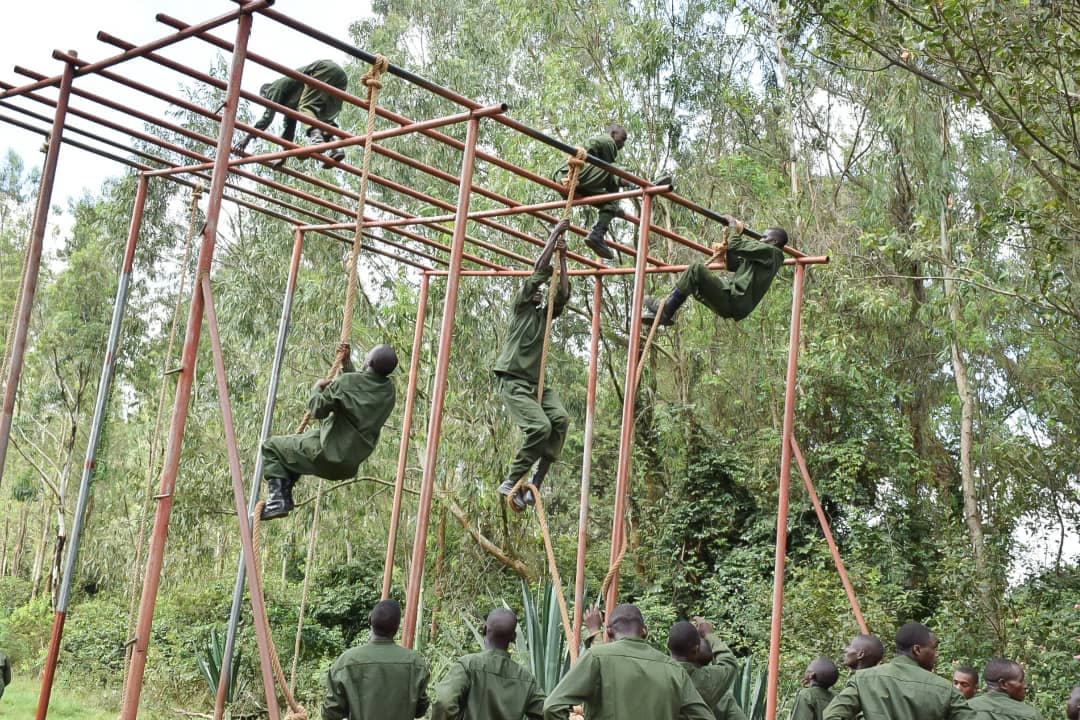
In his address, President Ndayishimiye called for a stronger, more modern defense and security apparatus capable of confronting any external threat.
“As we enter the New Year, we wish for your institutions to rise to another level and truly become strong institutions capable of confronting anyone who dares to challenge them,” he told defense and security forces. “We want institutions characterized by intelligence, knowledge, expertise, and wisdom, in line with modern times.”