

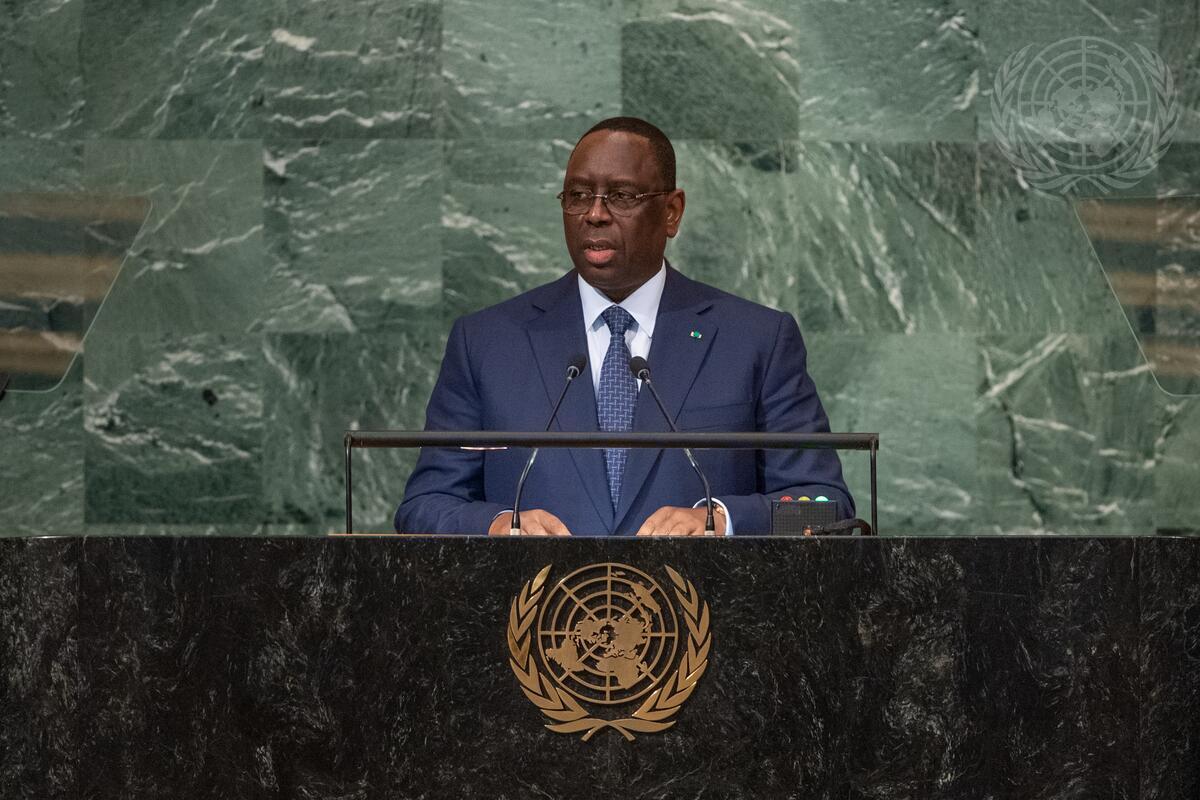
The Burundian government has come under fire after the African Union Commission rejected former Senegalese President Macky Sall’s bid for United Nations Secretary-General—a nomination endorsed by AU chair President Évariste Ndayishimiye and widely criticized as a diplomatic blunder.
In a statement issued Monday, the local civil society organization PARCEM urged the government to provide a clear explanation of the controversy, warning that a failure to clarify the matter could damage Burundi’s image.
“This candidacy has generated controversy within the African Union, which risks tarnishing the country’s image,” PARCEM said.
The group called for “clear and transparent” communication with the Burundian public, arguing that the issue could undermine both the country’s reputation and that of its institutions.
“The Ministry of Foreign Affairs is the technical body responsible for advising the highest authorities of the state in order to better guide the management of important diplomatic matters,” the statement added.
Over the past week, at least twenty African Union member states formally objected to Macky Sall’s candidacy. They did so by breaking the “silence procedure” that had been used to seek approval of his candidacy within 24 hours.
The dispute stems from a move by Burundi — which currently holds the African Union’s rotating chairmanship — to submit Sall’s candidacy to United Nations headquarters in New York three weeks ago.
The twenty countries opposed the move, with Nigeria among those citing procedural irregularities and violations of the principle of regional rotation.
Senegal, Sall’s home country, also firmly rejected the candidacy, saying it had not been consulted by the Burundian government.
The controversy intensified after Sall made an unexpected visit to Burundi’s economic capital Bjumbura last month. No official explanation was given for the visit, fueling speculation online that he was seeking support for a bid for the U.N.’s top post.
Diplomatic tensions spill into public view
The disagreement quickly escalated into a public diplomatic row, with senior officials taking to social media to defend their positions.
In a statement on X, Rwanda’s Foreign Minister Olivier Nduhungirehe cast the episode as a leadership failure, accusing the AU chairperson of risking the institution’s credibility.
“It’s unbelievable to note that a whole continental organization can be tarnished or driven into a crisis by its own chairperson, who has been in office for not even two months,” he wrote.
Nduhungirehe said the move by 20 member states to break the silence procedure was not aimed at rejecting Macky Sall, but at opposing what he described as a flawed process initiated by Burundian President Évariste Ndayishimiye in violation of AU rules on international candidacies.
“This was too much for many AU member states… They decided to break the silence, block the decision and remind the Chairperson that the African Union is governed by the rule of law,” he added.
Its representative to the African Union and ambassador to Ethiopia, Willy Nyamitwe, dismissed the claims as exaggerated and misleading.
“The statement… is regrettable in both tone and substance, as it misrepresents established procedures of the African Union and unnecessarily personalizes what is, in essence, a routine institutional process,” he said in post on social media.
Nyamitwe defended the use of the silence procedure as a standard AU mechanism, arguing that objections from member states reflect normal consultation rather than crisis.
“The fact that some member states chose to break the silence does not constitute a crisis,” he said.
He also rejected claims that President Ndayishimiye imposed the 24-hour deadline, saying the timeframe was set by the Permanent Representatives’ Committee despite reservations from AU legal advisers.
“It is therefore inaccurate to attribute this aspect to the Chairperson,” he said.
Nyamitwe further cautioned that inflammatory public commentary risks undermining the AU’s credibility.
“Public commentary… does not contribute to constructive engagement,” he said.
Calls for Accountability
Despite Nyamitwe’s defense, PARCEM insisted that the Burundian government must be held accountable if procedural errors are confirmed.
The group demanded the resignation of the foreign minister should any irregularity be proven.
“If it is proven that there was a procedural irregularity, the Minister of Foreign Affairs should step down and resign, or be removed from office,” PARCEM said.
The organization warned that Burundi must act quickly to contain the fallout.
“Burundi must act quickly to contain this potential crisis, which could lead to a poor start to its rotating presidency of the African Union.”




Leave a comment