

Burundi’s deaf community and disability rights advocates are sounding the alarm over what they describe as deepening discrimination in schools, universities and the job market, despite laws guaranteeing equal rights for persons with disabilities.
At the core of the problem is a chronic shortage of sign language interpreters, limited learning resources and insufficiently trained teachers—barriers that persist from primary school through university and into professional life. For many deaf graduates, these challenges translate into exclusion, unemployment and a growing sense of being undervalued.
Willy Nsengiyumva, 27, a university graduate born with a hearing disability in Mwaro commune, central Burundi, says his academic journey was marked by perseverance amid systemic neglect.
“After finishing sixth grade with hearing students, still without an interpreter, I faced many difficulties. The teachers did not know sign language,” he recalled. “But my father encouraged me to continue studying with courage.”
The situation did not improve at the University of Burundi, where Nsengiyumva studied accounting at the Institute of Commerce (ISCO) on the Rohero campus—again without interpreters.
“My hearing classmates communicated with me in writing, on scrap paper or by phone, in Kirundi. That is how I managed to follow the courses,” he said.
Even during his internship at the Military Hospital in 2024, no specialized interpreter was provided, reinforcing what advocates describe as a systemic failure to support deaf students throughout their education.
Exclusion in the Classroom
Similar experiences are shared by Fivan Désire Biraronderwa, 33, a university graduate living in Bujumbura who lost his hearing following an illness.
“My classmates sidelined me and gossiped about me. I could not hear them, but I could see it through their gestures,” he said. “During group presentations, they excluded me because I could not speak or hear.”
When teachers assessed his participation, questions were written on the board so he could respond in writing—an accommodation that offered access, but little inclusion.
Advocacy groups say such experiences are widespread. While national data on deaf students remains scarce, a 2024 UNICEF report estimates that more than 6,000 children in Burundi live with disabilities, with only about 2 percent attending school.
Government Promises, Ground Reality
The Burundian government acknowledges the challenges and says progress is being made. Jean Christophe Irambona, spokesperson for the Ministry of Education, said teacher-interpreters are now present in schools.
“Now, in schools, there are teacher-interpreters,” he said.
Disability rights organizations contest this assessment. The Federation of Associations of Persons with Disabilities in Burundi (FAPHB) describes such statements as political rhetoric detached from reality.
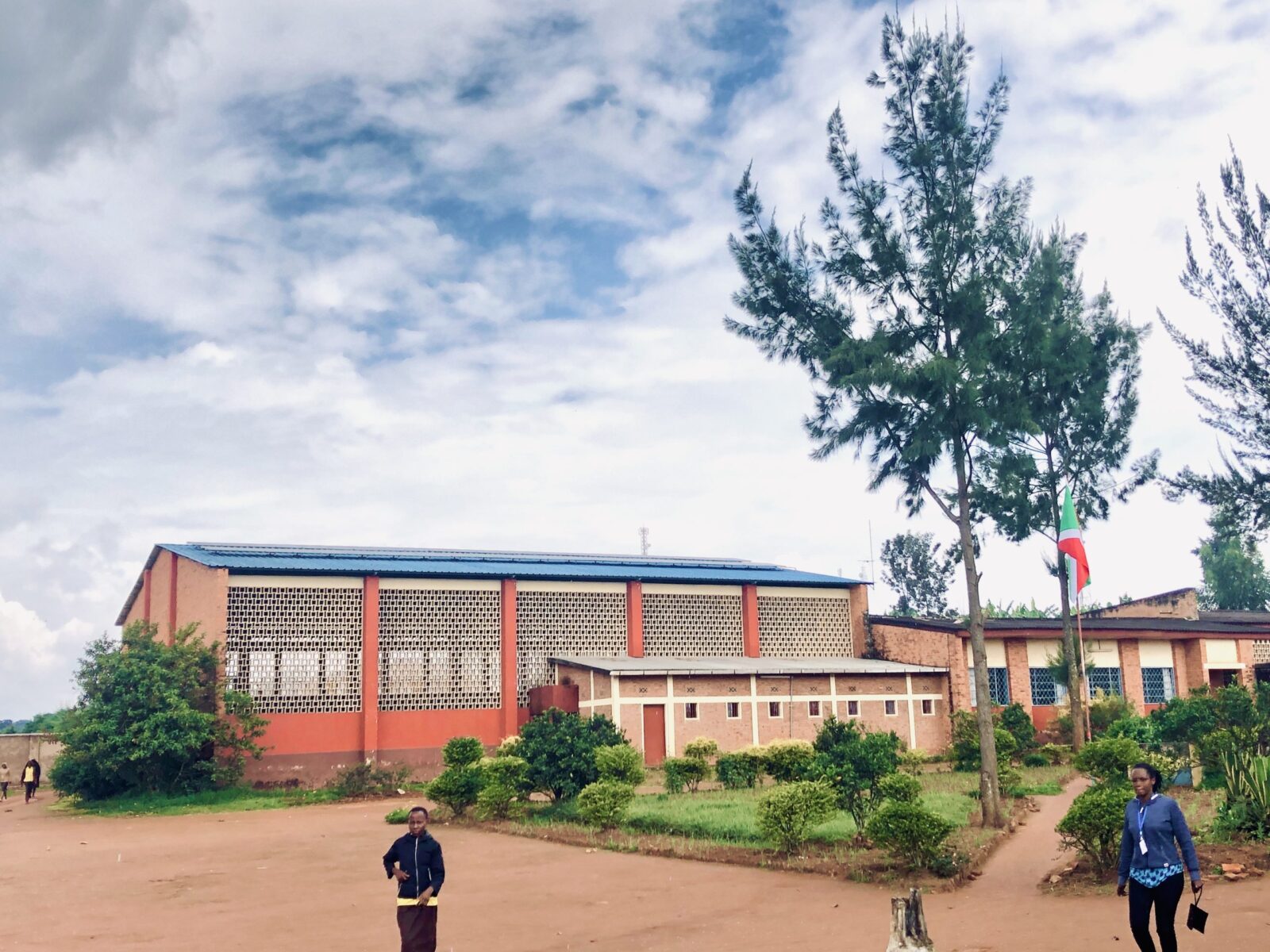
“We still do not have qualified interpreters,” said Cassien Bizabigomba, head of FAPHB. He cited Lycée Notre Dame de la Sagesse in Gitega—one of the country’s prominent schools—as an example where deaf students are enrolled but inadequately supported.
“As for universities, to my knowledge, there is not a single interpreter,” he added.
School authorities at Lycée Notre Dame de la Sagesse, however, say efforts have been made. The school’s director, Father Simon Nzigirabarya, said the institution currently enrolls 36 students with disabilities and has had sign language interpreters since 2018.
“Before 2018, there were no interpreters, but today our students with disabilities are supported,” he said.
Nzigirabarya acknowledged persistent challenges, noting that interpreters often lack subject-specific expertise, making it difficult to translate technical subjects such as mathematics, chemistry and physics. He also cited understaffing, with a single interpreter often working throughout the day without replacement.
As a long-term solution, he called for sign language training for teachers, while acknowledging that older educators often struggle to acquire new language skills. He added that the Ministry of Education is aware of the issue.
Degrees Without Jobs
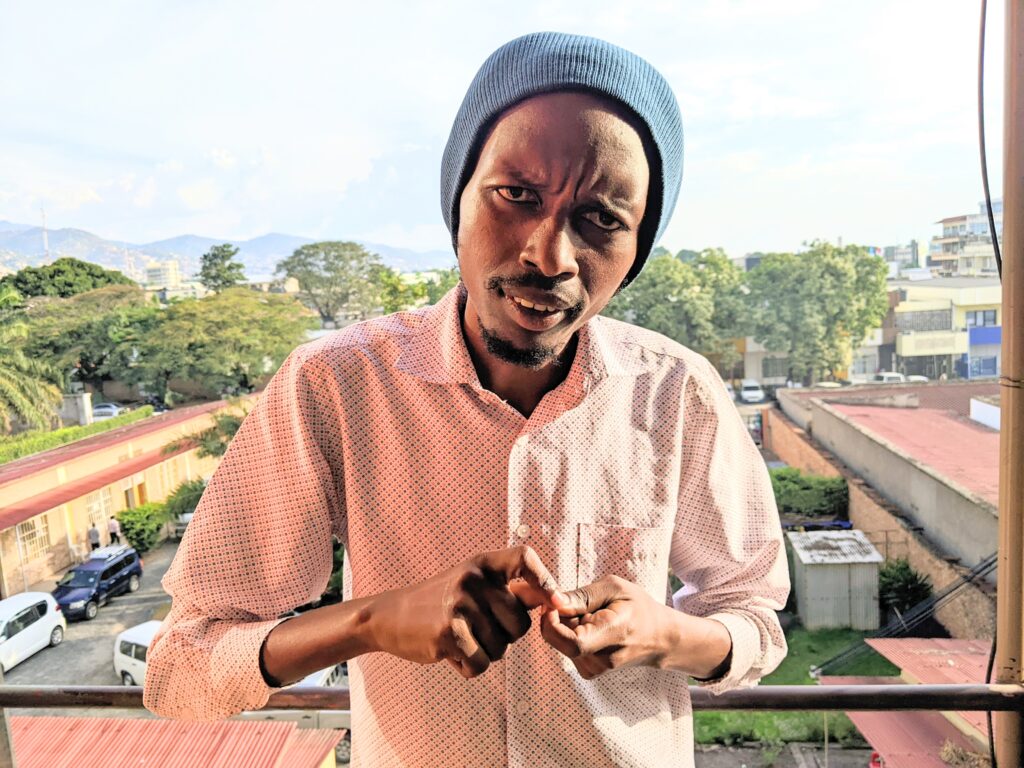
Beyond education, communication barriers continue to block deaf graduates’ access to employment in both public and private institutions.
“When I apply for a job, communication becomes the problem,” Biraronderwa said. “They ask questions, but I struggle to answer. They do not welcome me, and I never receive feedback.”
Pascal Niyonsenga, 29, another university graduate, echoed the frustration. “Discrimination is always present and will remain as long as negative mindsets persist,” he said.
The Association for the Promotion of an Inclusive Environment for People Living with Disabilities (APEIH) attributes much of this exclusion to the lack of specialized human resources.
“In public schools, there are not enough trained staff to support deaf students,” said Emmanuel Ntakarutimana, APEIH’s deputy president. “During job searches, communication is the main barrier, leading to widespread discrimination.”
Rights on Paper, Not in Practice
Burundi’s law on the promotion and protection of the rights of persons with disabilities—particularly Articles 29 and 32—guarantees access to inclusive social life, workplaces, information and communication. Advocates argue these rights remain largely unenforced.
The Ministry of Education concedes that deaf graduates face discrimination linked to limited sign language skills among employers.
“Yes, many first faced school exclusion, and those who graduated often struggle to apply for jobs because they do not know the language used,” Irambona said.
Calls for Sign Language and Inclusion
Advocates and members of the deaf community are urging the government to invest in sign language training, promote social inclusion and ensure access to information.
“Deaf children should be received like all other children,” Biraronderwa said. “If the government gives jobs to deaf people, parents will see that we have value, and more children will go to school.”
Niyonsenga called for interpreters in courts, police stations and public services, as well as sign-language access to national announcements and election information.
APEIH echoed the appeal, saying closing the information gap is key to ending discrimination.
“To eliminate discrimination, we must promote sign language and introduce it into school curricula where possible,” Ntakarutimana said.
A Fragile Hope
These challenges unfold amid broader crises in Burundi’s education sector, including shortages of materials, infrastructure and qualified teachers—problems that disproportionately affect students with disabilities.
Deaf individuals also struggle to access government announcements and televised news, limiting awareness of job opportunities and public services.
Still, advocacy groups remain cautiously hopeful.
“Despite the situation, we can still hope that solutions will be found,” Bizabigomba said. “Inclusive education programs are trying, step by step, to address the problem.”
For Burundi’s deaf graduates, however, inclusion remains largely silent—waiting to be translated into action.



Leave a comment