

A fresh diplomatic row has erupted between Burundi and Rwanda after the two countries’ foreign ministers exchanged strongly worded statements over a recent visit by a Banyamulenge delegation to Burundi’s economic capital Bujumbura.
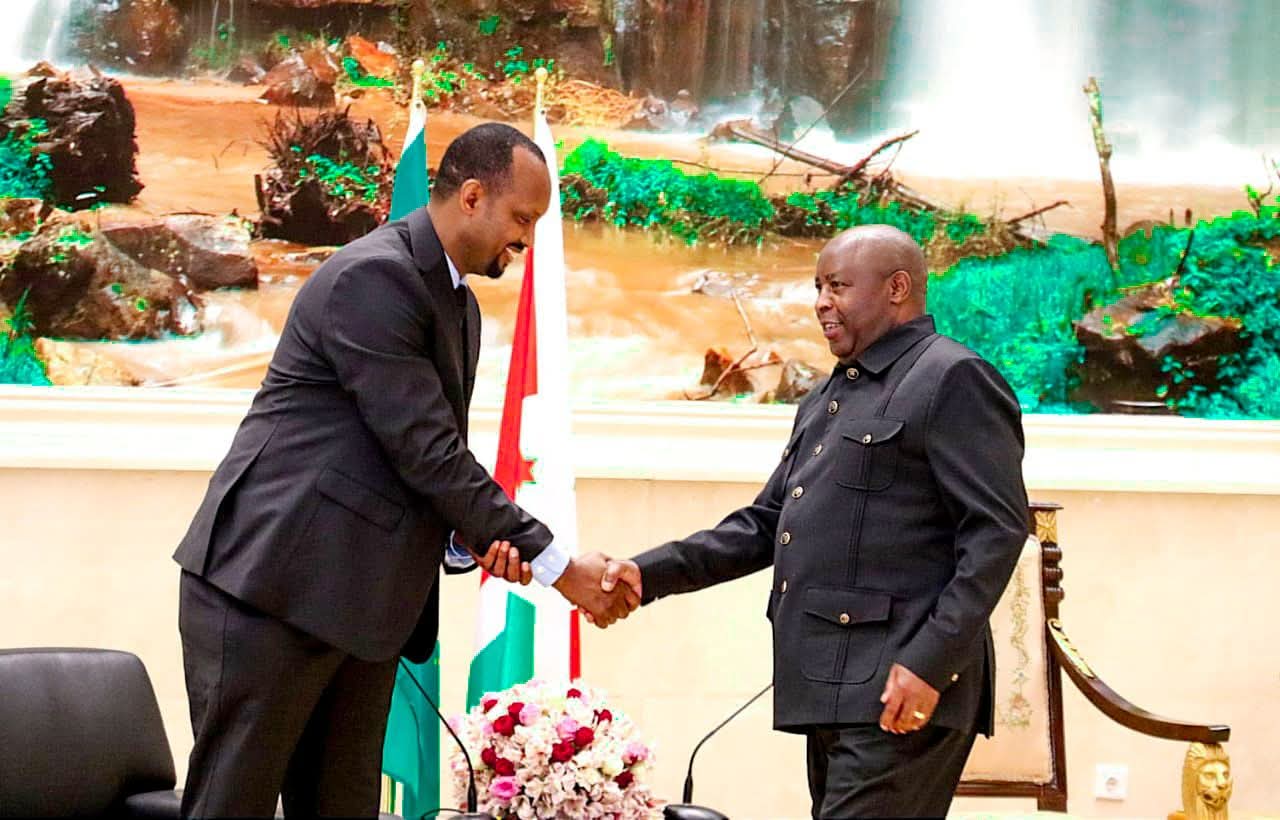
The dispute followed a meeting earlier this week between Burundian President Évariste Ndayishimiye and representatives of Banyamulenge Global Advocacy, a group that claims to speak for the Banyamulenge, a Congolese community mainly based in eastern DRC, where intense fighting has been raging between the Congolese armed forces and the AFC/M23 rebel movement allegedly backed by Rwanda
During the visit, the delegation praised Burundi’s role in efforts to stabilize eastern Democratic Republic of Congo (DRC) and rejected allegations that Burundian troops had targeted Banyamulenge civilians.
Instead, the delegation accused Rwanda of killing Banyamulenge and blaming Burundian forces in order to justify Rwanda’s military presence in eastern DRC.
Rwandan Foreign Minister Olivier Nduhungirehe reacted sharply, dismissing the delegation as “rogue individuals” and describing the visit as a calculated political maneuver. In a statement posted on X on Wednesday, he accused the group of being used against its own community and claimed Burundian troops were imposing an “ethnic blockade” in Minembwe, South Kivu, preventing Banyamulenge civilians from accessing markets.
Nduhungirehe also criticized President Ndayishimiye for receiving the delegation, arguing that the Burundian leader could not legitimately present the meeting as linked to his role as African Union Chairperson.
Burundi quickly hit back
Burundian Foreign Minister Edouard Bizimana on Thursday condemned Rwanda’s remarks as inflammatory, accusing Kigali of spreading misinformation and fueling ethnic division in the DRC.
“Rwanda has no authority to determine who may visit Burundi, an open, welcoming and peaceful country,” Bizimana said in a statement posted on X.
He also accused Rwanda of attempting to export its internal divisions into eastern Congo by manipulating sections of the Banyamulenge community against one another and against other Congolese groups.
The sharp exchange is the latest sign of worsening tensions between the two East African neighbours, whose relations have been strained by the conflict in eastern DRC, mutual accusations of destabilization, and competing narratives over the role and protection of the Banyamulenge community.
The standoff adds new pressure to already fragile regional diplomacy in the Great Lakes, where mistrust between governments continues to complicate peace efforts.
Relations between the two neighboring countries have remained tense for much of the past decade, especially since Burundi’s failed coup attempt in 2015, which Gitega says was backed by Rwanda, an accusation Kigali has repeatedly denied. Although President Évariste Ndayishimiye moved to reopen the border in 2022, relations deteriorated again as Burundi accused Rwanda of supporting armed groups opposed to its government, including RED-Tabara.
In early 2024, Burundi shut its land borders with Rwanda once more, with President Ndayishimiye alleging that Kigali was sheltering coup plotters and backing insurgents. Rwanda has consistently denied the accusation




Leave a comment