

A local environmental activist group, Nezerwa Investment, has denounced the persistence of widespread waste in Burundi’s economic capital Bujumbura despite recent cleanup efforts.
The group has said residents continue to dump plastics and other harmful waste in public spaces, undermining efforts to maintain hygiene and protect the environment.
“There is a lot of waste here in the city, and some of that waste is harmful to the environment,” said Silas Bucumi, the group’s national coordinator, according to local radio station Bonesha FM. “Plastic bags, sacks, and cartons are everywhere, and with the rainy season approaching, careless dumping could create severe health risks.”
Government’s Attempts at Waste Management
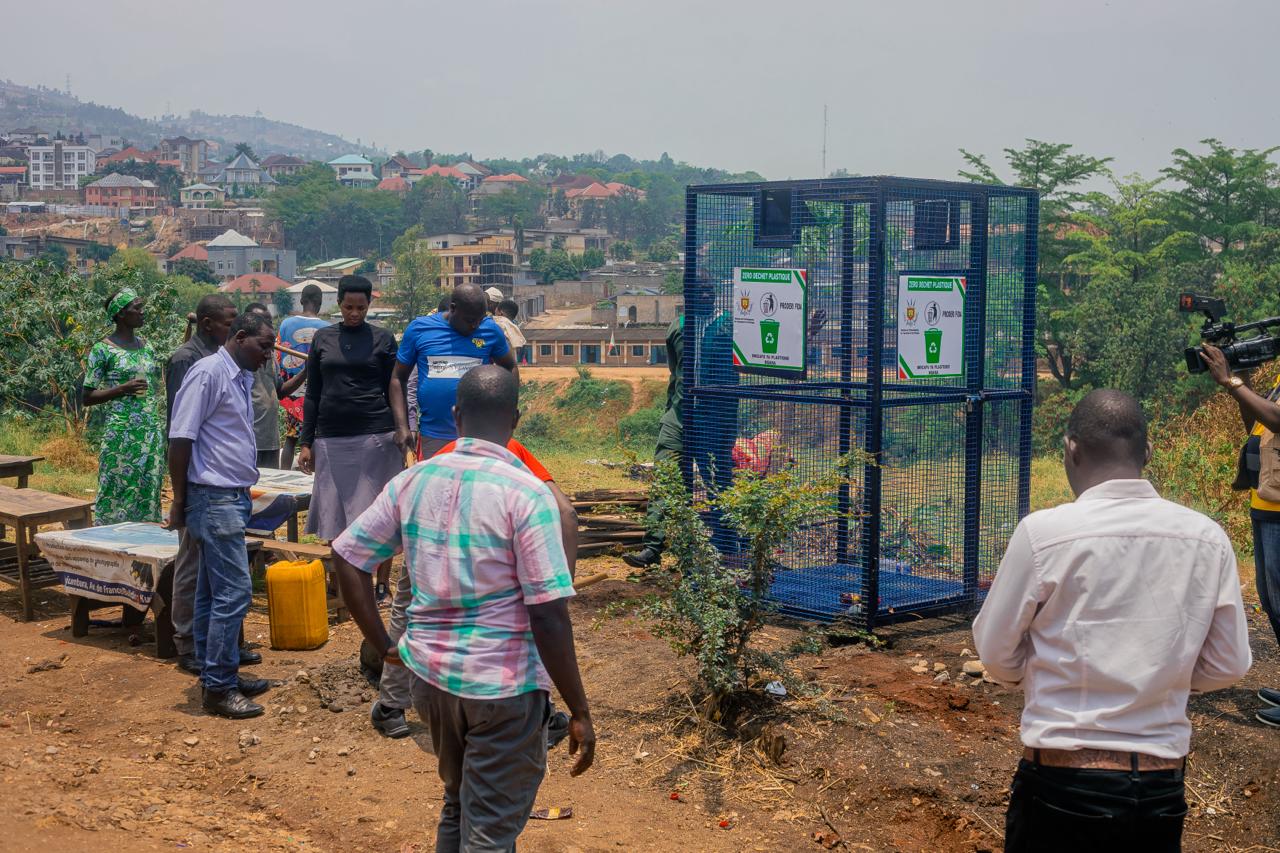
Authorities have attempted to address the issue. The National Office of Urbanism, Housing, and Construction (OBUHA) recently placed collection bins across Bujumbura to encourage the disposal of plastic waste. The initiative forms part of a broader plan to reduce pollution, officials said.
In 2024, First Lady Angeline Ndayishimiye also launched the “Zero Waste” campaign to promote cleaner communities by removing trash from public spaces, workplaces, and residential areas. While the campaign was praised by environmental groups, the presence of litter across the city suggests limited impact.
Yet, despite these initiatives, trash is still found nearly everywhere in the capital. OBUHA director Léonidas Nibigira recently criticized residents who dump waste in drainage systems, calling the practice “improper behavior” that undermines sanitation systems.
“The waste should not be scattered on the streets or hidden to be dumped anywhere,” he said. “We call on people to respect the national system for proper waste management so that it serves everyone.”
New Push for Plastic Waste Control
On Thursday, Christian Nimubona, Director General of Environment, Water Resources and Sanitation at the Ministry of Environment, said Bujumbura requires at least 250 bins dedicated to plastic waste.
Speaking during an activity to install new bins in Ntahangwa commune, as part of the “Zero Waste” program, Nimubona stressed the urgent need to prevent plastics from polluting Lake Tanganyika.
“Let’s clean this country. Let’s stop plastic bottles from being carried by rainwater into Lake Tanganyika, where they pollute the water we drink and harm aquatic life. Microplastics end up entering our bodies and causing disease—it is about protecting human health from contamination,” he said, according to Yaga, a local collective of Burundian bloggers.
Nimubona noted that funding for the bins came from companies importing and using non-biodegradable plastics. “We started in Bujumbura, and for all the targeted sites, we calculated a need of 250 bins. So far, around 150 have already been installed,” he added.
According to a 2019 Ministry of Environment report, each Bujumbura resident produces an average of 0.6 kilograms of waste daily, or about 217 kilograms per year. Of this, 57% is biodegradable and 43% non-biodegradable, with plastics making up about 8%—equivalent to 51 tons per day.
Burundian law requires communes to establish proper waste management systems, but penalties for illegal dumping are rarely enforced.






Leave a comment