
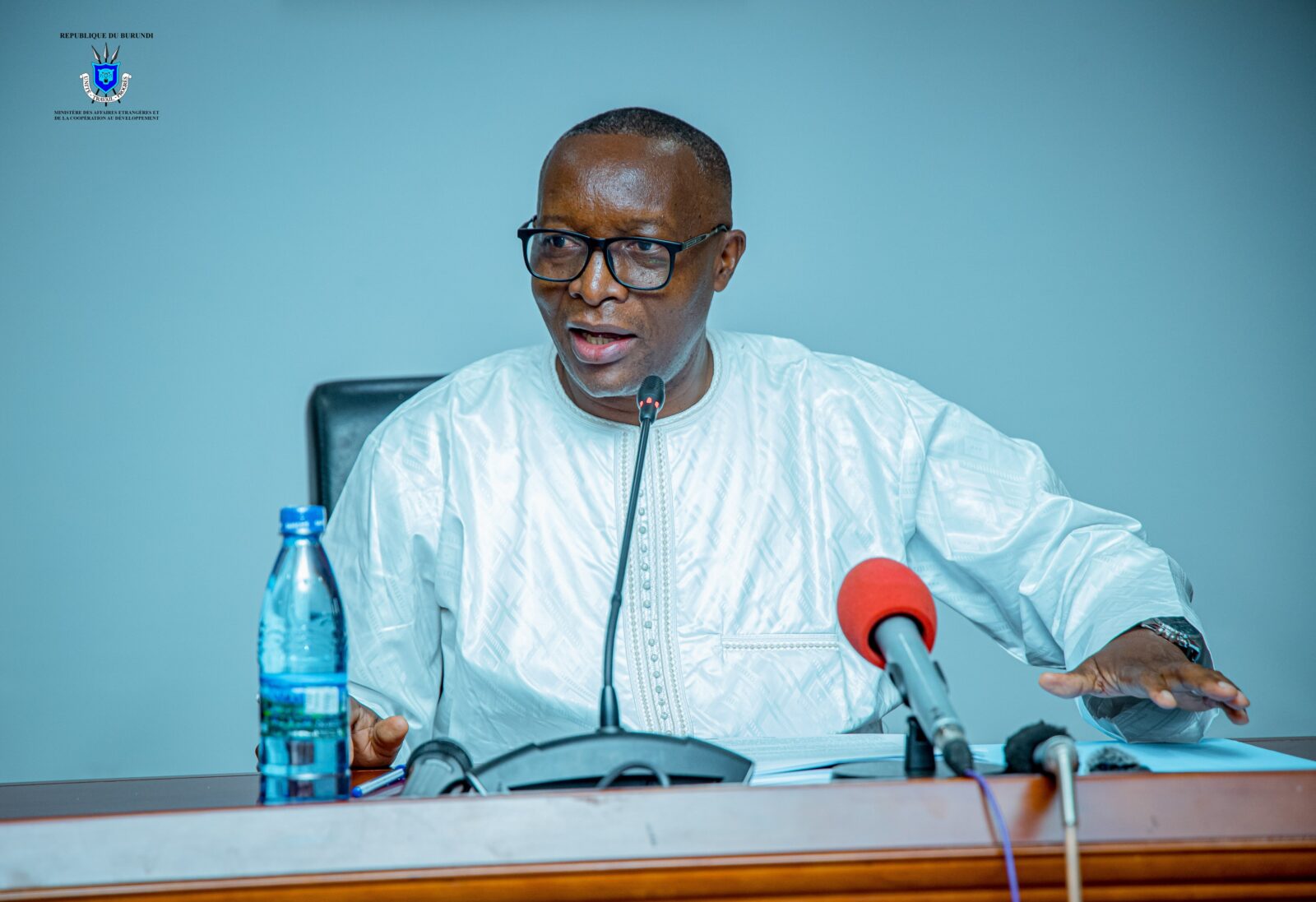
Burundi’s government has moved to contain diplomatic fallout after Foreign Affairs Minister Édouard Bizimana publicly accused Qatar of undermining international efforts to enforce the U.S.-brokered peace agreement in eastern Democratic Republic of Congo (DRC), remarks that were later deleted and contradicted by President Évariste Ndayishimiye.
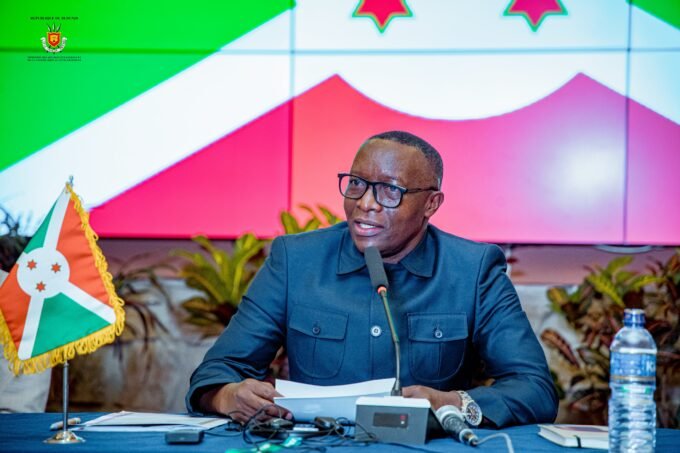
On Saturday night, Bizimana posted on X (formerly Twitter) accusing Qatar of using its “influence and cash” to dissuade the United States from acting against Rwanda, which Gitega and Kinshasa accuse of backing the AFC/M23 rebels and violating the U.S.-brokered peace deal signed in December 2025.
The accord, signed by the presidents of Rwanda and the DRC under U.S. mediation and of which , was intended to halt hostilities linked to the long-running conflict in the region and Burundi’s President Evariste Ndayishimiye was a witness.
In the now-deleted post, Bizimana wrote that Rwanda had “tested” Washington without consequence and continued to seize territory in eastern DRC in breach of the agreement, while Qatar allegedly played a negative role by shielding Kigali from U.S. pressure.
The accusation sparked criticism and confusion, particularly given Qatar’s role as a mediator in the DRC peace process. Within hours, the post disappeared from Bizimana’s account without explanation.
On Sunday, President Évariste Ndayishimiye issued a statement that sharply diverged from his minister’s position, describing it as a clarification aimed at correcting “any misunderstanding and wrong statement” regarding Qatar.
“Burundi has always appreciated the long-lasting good bilateral relations with Qatar, as well as Qatar’s crucial role in mediation efforts in DRC,” Ndayishimiye said in a post on X. “It is important to clarify any misunderstanding and wrong statement regarding Qatar’s contribution in development and peacebuilding.”
The president also emphasized Burundi’s strong diplomatic ties with the Gulf state and praised Doha’s involvement in regional peace efforts, effectively distancing his administration from the foreign minister’s earlier remarks.Qatar welcomed the clarification.
In response to President Ndayishimiye’s post, Mohammed bin Abdulaziz Al-Khulaifi, Qatari Minister of State at the Ministry of Foreign Affairs, thanked the president and reaffirmed Qatar’s commitment to peace mediation.
“Thank you, Mr. President, for the clarification and your kind acknowledgment,” he wrote on X. “Guided by its principled approach, the State of Qatar remains steadfast in its commitment to peacebuilding, mediation, and the peaceful resolution of conflicts, and will continue to engage constructively with all partners in support of stability and lasting peace.”
The diplomatic incident comes at a critical moment as fighting continues in eastern DRC between government forces—supported by Burundian troops—and the Rwandan-backed AFC/M23 rebels. Both sides accuse each other of violating the Washington peace agreement.
Tensions have escalated further after AFC/M23 fighters seized the strategic city of Uvira in December 2025, adding to Goma and Bukavu, which were captured earlier in 2025. Although the rebels later announced a withdrawal following pressure from Washington, the credibility of that claim remains unclear.
Burundi has played a significant role in the conflict through the deployment of its troops under a bilateral military memorandum with the DRC government. Following Uvira’s fall, reports suggested that Burundian forces had withdrawn.
Speaking at a press conference on Friday in Burundi’s economic capital, Bujumbura, CNDD-FDD Secretary General Révérien Ndikuriyo dismissed these claims, clarifying that only specific units were redeployed to avoid implicating Burundi in alleged violations of the Washington Peace Agreement amid renewed fighting in South Kivu.
.